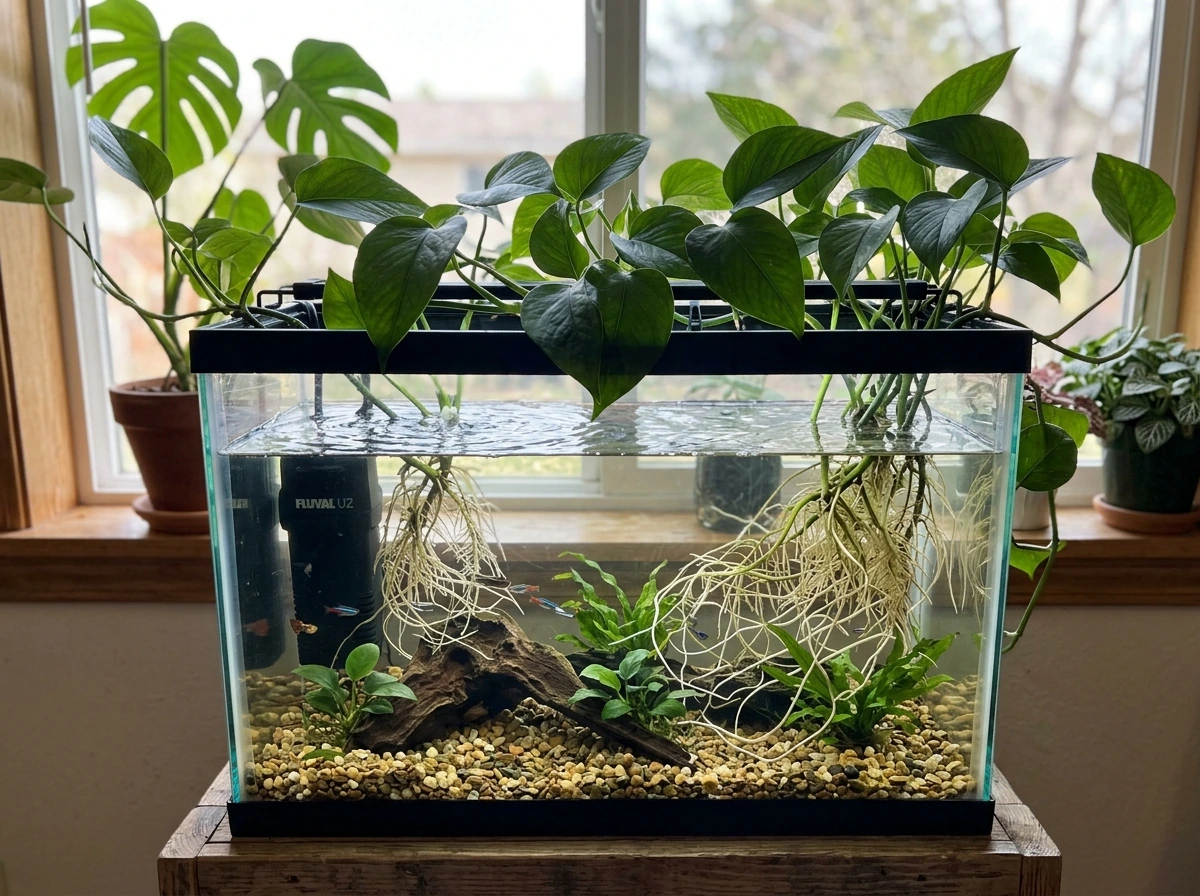
Yes, pothos can absolutely grow in a Yes, pothos can absolutely grow in a fish tank, but with one important rule: keep the roots in the water and the leaves out of it., but with one important rule: keep the roots in the water and the leaves out of it. That single principle is the difference between a thriving plant and a rotting mess. Pothos (Epipremnum aureum, also called devil's ivy) is a terrestrial plant, not a true aquatic one. It doesn't live fully submerged. What it does brilliantly is dangle its roots into aquarium water, absorb nitrates and ammonia your fish produce, and push out lush new growth above the surface. Done right, it cleans your tank and looks great doing it.
How to Grow Pothos in a Fish Tank: Step by Step Guide
Marcus Holloway
24 Mar 2026
Can pothos live in a fish tank (and what 'grow' actually means here)
When people ask whether pothos can grow in a fish tank, they usually mean one of two things: can it survive with its roots in aquarium water, or can it live fully submerged? The answer to the first is yes. The answer to the second is no, at least not for long. Submerged leaves rot, die back, and foul your water. Submerged roots, on the other hand, thrive. The plant essentially treats your aquarium like a hydroponic nutrient reservoir, drawing up dissolved nitrogen compounds (nitrates, ammonia) through its roots and using them to fuel leaf growth above the waterline.
This semi-aquatic setup is well established in the hobby. Hobbyists use it specifically because pothos pulls nitrogen from the water, helping keep nitrate levels in check between water changes. It's not magic filtration, but it's a genuine biological benefit on top of the aesthetic one. The plant earns its spot in your tank.
Two ways to set this up: fully submerged roots vs. hanging above
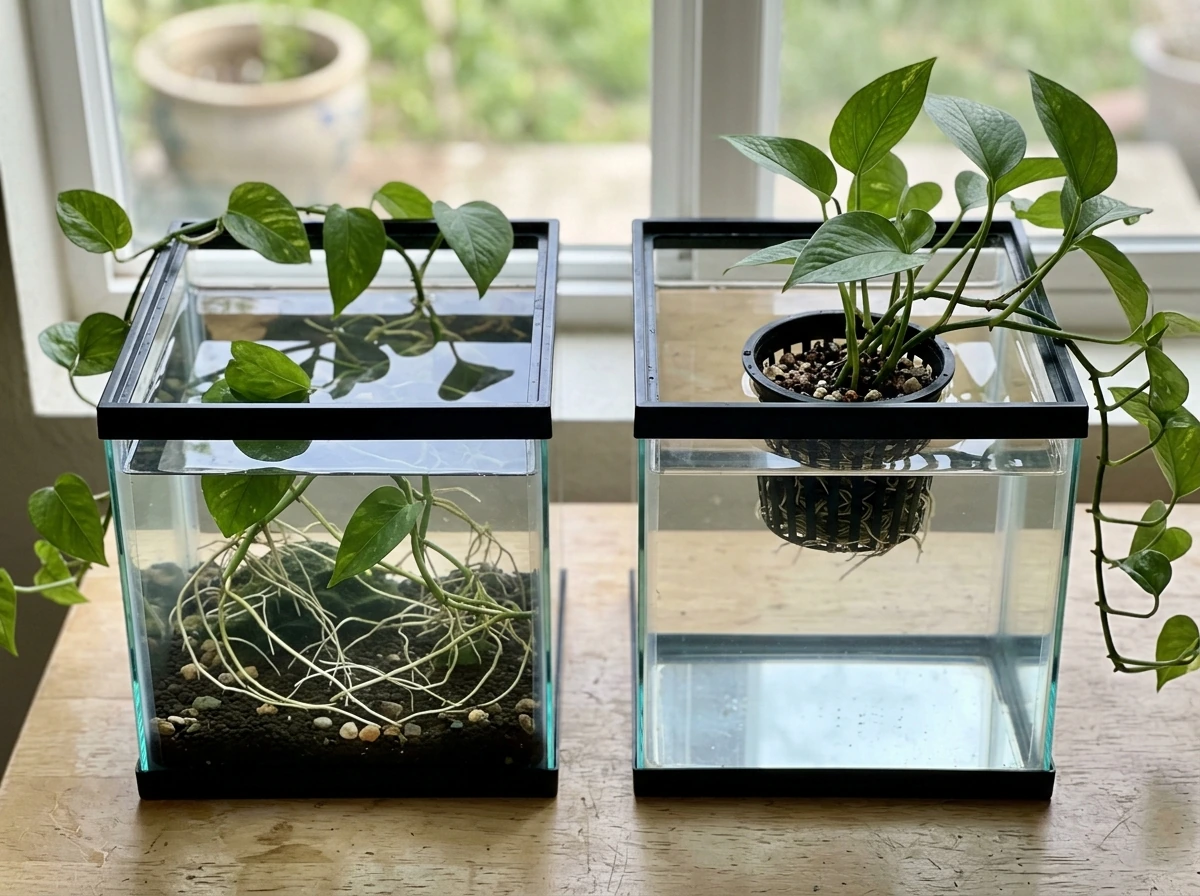
There are two main approaches hobbyists use, and which one you choose depends on your tank style and how much space you're working with.
Option 1: Roots fully submerged, leaves draped over the rim
This is the most common setup. You place a cutting or a plant with established roots so the root mass hangs into the tank water, and the stems and leaves rest over the edge or are supported by a clip or ledge. The roots sit in the aquarium water full-time. This works well in standard aquariums with an open top or a cut-out in the lid. It's low-effort once established and gives the roots maximum access to the water column for nutrient uptake.
Option 2: Semi-aquatic with a net pot or container at the surface
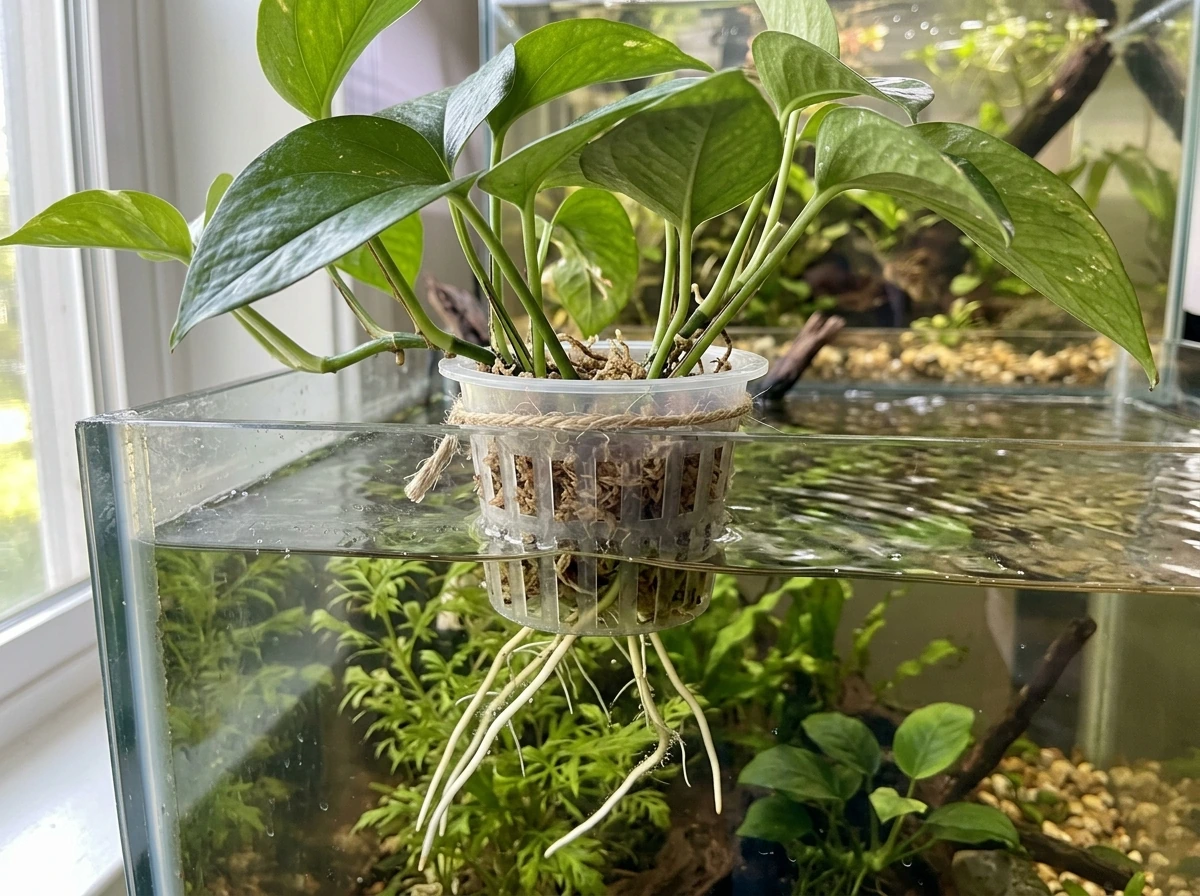
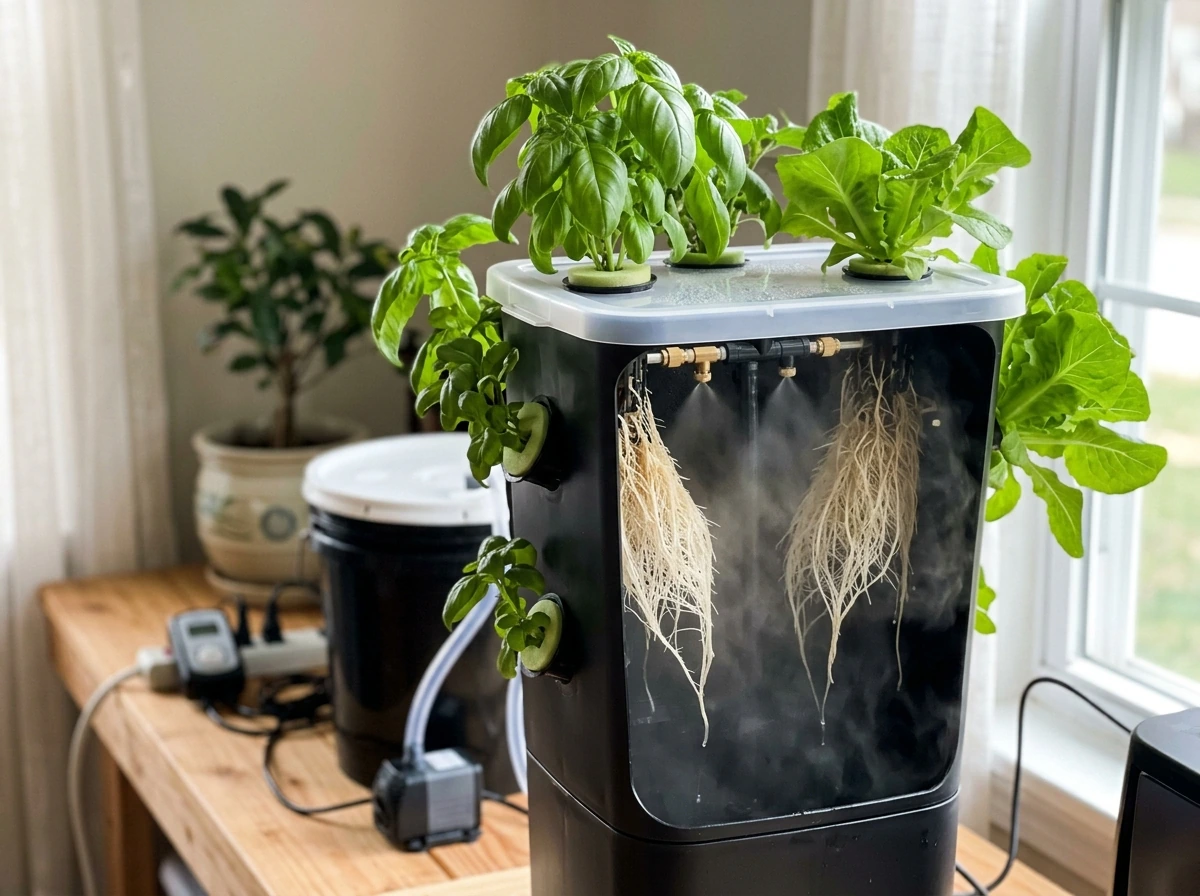
The second approach uses a small net pot or open container wedged at the waterline, think of a hang-on-back style mount or a section of PVC pipe resting across the tank rim. The plant sits in the container with its roots extending down into the water below. This gives you more control over root depth and makes it easier to remove the plant for maintenance. It also reduces the chance of stems touching the water surface and rotting at the base. If you're growing pothos alongside other plants in a more structured setup, this method integrates more cleanly.
| Setup | Best For | Root Control | Ease of Removal | Rot Risk |
|---|---|---|---|---|
| Roots over rim, no container | Simple tanks, minimal equipment | Low | Moderate | Low if positioned well |
| Net pot / container at waterline | Structured tanks, multiple plants | High | Easy | Very low |
| Cutting in a clip or suction mount | Propagating or testing placement | Moderate | Very easy | Low to moderate |
My personal preference is the net pot approach for established plants and a simple suction cup clip for cuttings I'm rooting directly in the tank. It keeps things tidy and gives me easy access when I need to prune roots or swap out a plant.
What conditions pothos needs in aquarium water
Light
Pothos needs light for its leaves, not its roots. The roots will sit happily in a dark tank, but the leaves above need medium to bright indirect light to grow well. Direct sun on the leaves causes burning and also heats up the tank, avoid it. If your tank light runs 8 to 10 hours a day and the pothos leaves are above the waterline in that light path, that's usually enough. If the leaves are off to the side or away from the tank light, a nearby window with filtered light or a small grow light works fine. Low light won't kill it, but growth slows noticeably.
Water temperature
Pothos prefers warmer water. It performs best when the aquarium is in the range of 65 to 80°F (roughly 18 to 27°C), which aligns well with most tropical freshwater fish tanks. If your tank runs cooler than 60°F consistently, expect slower root and leaf growth. Most community fish tanks sit between 72 and 78°F, that's an ideal range for pothos too, so compatibility is usually a non-issue here.
Water quality and nutrients
Pothos actually benefits from fish-influenced water. The dissolved nitrates your fish produce become a nutrient source for the plant. This is the core reason hobbyists add pothos to aquariums, it closes the nitrogen loop and reduces how often you need to do water changes to control nitrate buildup. You don't need to dose fertilizer into a fish tank for pothos; the fish do that job for you. If you're growing pothos in a tank without fish (or in a very lightly stocked tank), growth will be slower because nutrient availability is lower.
On pH: pothos is tolerant of a fairly wide range, but the same principles that apply to hydroponics apply here. Extreme pH swings affect nutrient uptake. A pH between 6.0 and 7.5 covers most aquarium fish and suits pothos fine. Hard or soft water is less of an issue than keeping overall water quality stable.
Flow and oxygenation
Pothos roots don't need strong flow, but some gentle water movement around them is better than completely stagnant conditions. Most standard aquarium filters provide enough circulation. Stagnant water around the roots increases the risk of anaerobic bacteria and root rot. If your tank has low flow, just make sure there's some surface agitation happening.
How to plant and anchor pothos safely
This is where most beginners run into problems. The goal is to hold the plant in place with roots in the water and stems/leaves clearly above the waterline, without anything rotting at the waterline junction.
- Start with a healthy cutting that has at least one or two nodes (the bumpy joints on the stem). Remove any leaves that would sit at or below the waterline — those will rot and affect water quality.
- If you're using an established plant with soil, rinse all the potting mix off the roots thoroughly before introducing it to the tank. Soil in an aquarium clouds the water and can introduce unwanted bacteria or pests.
- Let roots reach about 4 to 5 inches in length before putting the plant into its permanent aquarium position. You can do this by rooting the cutting in a separate jar of water first.
- Position the plant so the root mass hangs into the water but the stem base and all leaves sit above the waterline. The junction where stem meets water is the rot-risk zone — keep it above the surface.
- Use a suction cup clip, a hang-on-back net pot holder, or a piece of PVC pipe resting across the tank rim to anchor the plant. Avoid wedging stems tightly in narrow spaces where airflow is restricted.
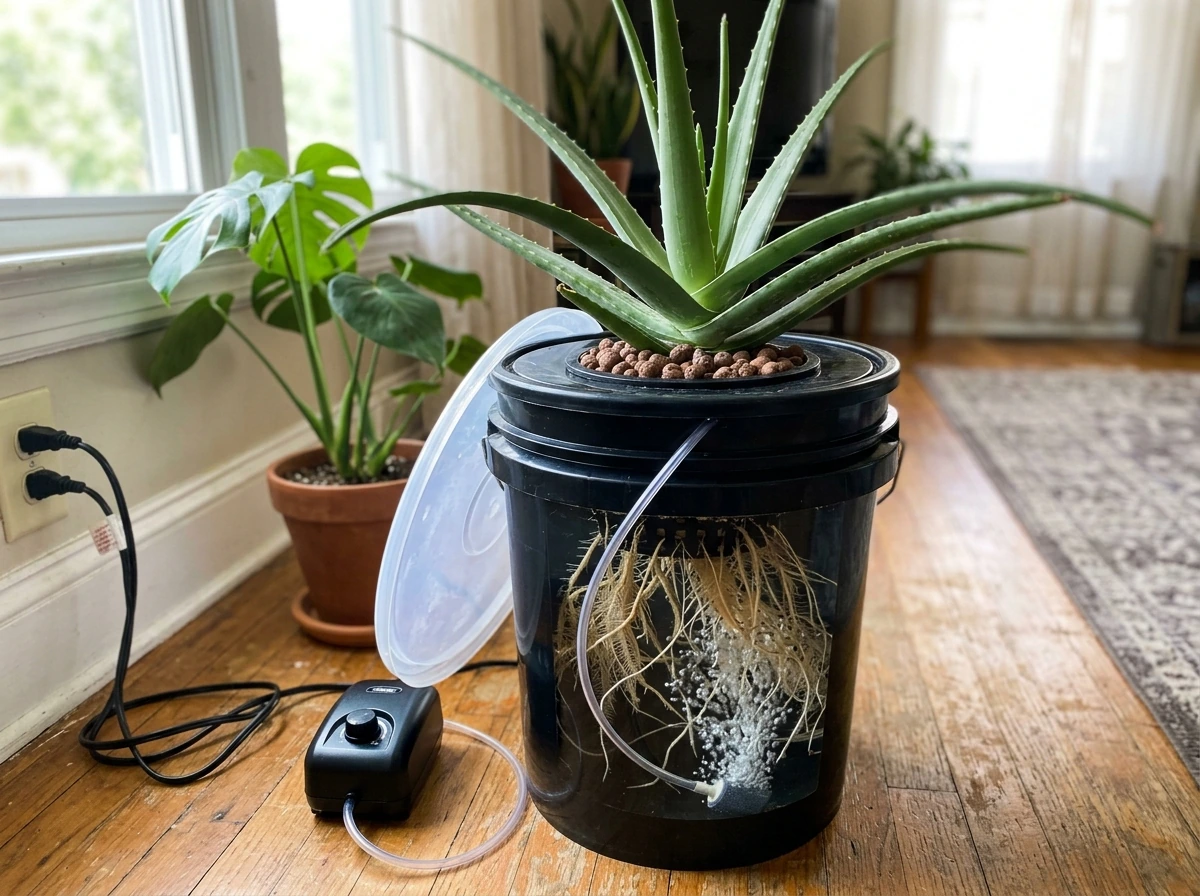
- If using a net pot, you can fill it loosely with hydroton (clay pebbles) or leave it empty — pothos doesn't need substrate, it just needs something to keep it from falling in.
One mistake I made early on was letting the stem sit right at the waterline in a clip. It rotted at that exact point within two weeks. The fix was simple: raise the clip so the stem base sits a full inch or two above the water surface, with only the roots dangling below. That small change made a big difference.
Propagation and transplanting: getting new growth started fast
Pothos is one of the easiest plants to propagate in water, which makes it a natural fit for aquarium setups. You don't need to buy a fully grown plant, a cutting from any healthy pothos will work.
Taking a cutting
Cut a healthy stem section 4 to 6 inches long with at least two nodes. Make the cut just below a node. Remove the lowest leaf so a bare node is available for root development. That node is where roots will emerge.
Rooting in a jar first (recommended for beginners)
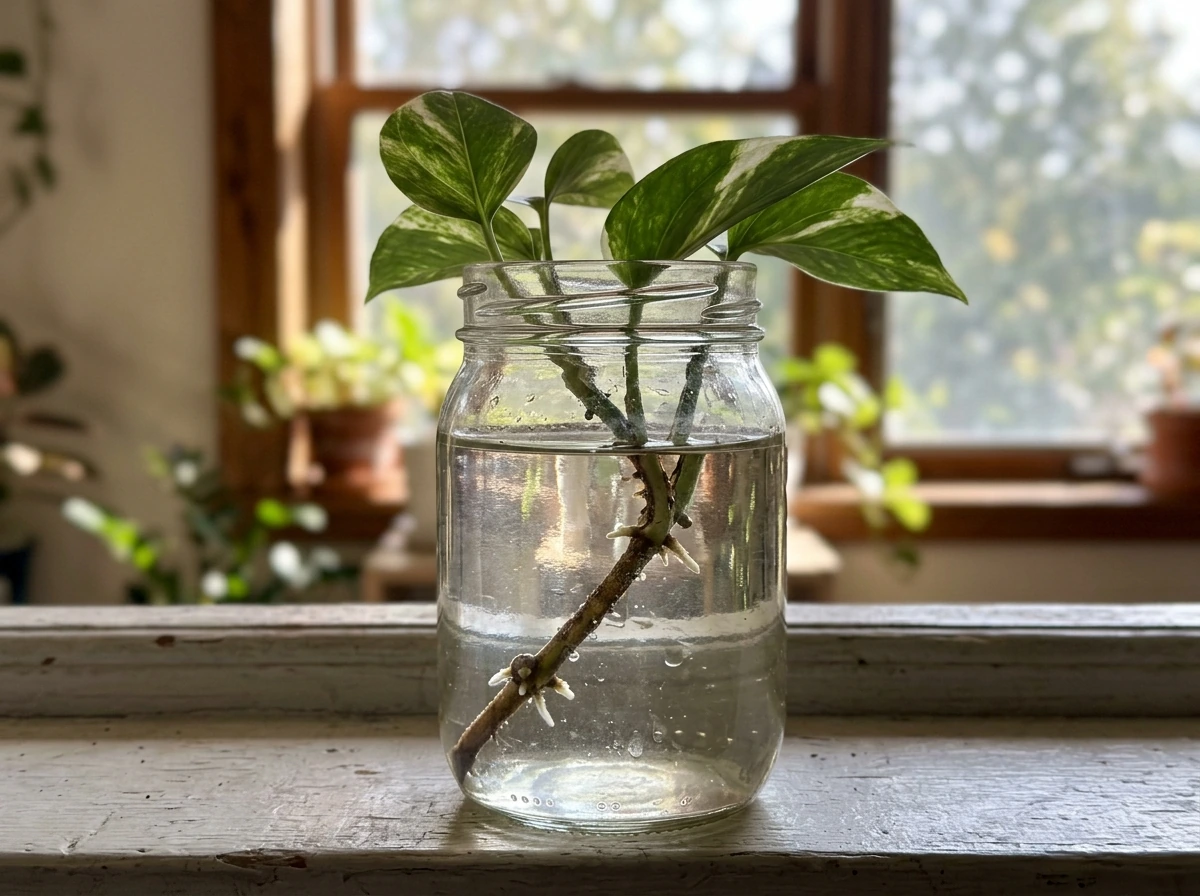
Place the cutting in a clear jar of plain water (not aquarium water yet) in a bright, indirect light spot. Change the water every few days to prevent stagnation. You should see small root buds forming within 1 to 2 weeks, and roots reaching a usable length of 4 to 5 inches within 3 to 4 weeks. Warmer room temperatures (above 65°F) speed this up. Once roots are established at that length, transfer the cutting to your aquarium setup.
Rooting directly in the tank
You can also clip a fresh cutting directly into your aquarium setup and let it root there. This works, but it's slightly slower to establish and riskier if your water flow dislodges the cutting before roots anchor. Use a firm clip and make sure the node is submerged in the water. Expect rooting to take the same 3 to 4 weeks, with new leaf growth visible once the cutting has a solid root system going.
Maintenance and monitoring once it's established
Once pothos is rooted and growing in your aquarium, it's pretty low-maintenance, but not zero-maintenance. Here's what to stay on top of.
Pruning roots and leaves
Roots can grow fast in a well-stocked fish tank with good nutrients. Check root length every few weeks. Very long, dense root masses can reduce water flow in smaller tanks. Trim roots back if they're getting out of hand, the plant handles root pruning fine and quickly regrows. For leaves, standard pothos care applies: trim yellowing or damaged leaves at the stem base to keep the plant tidy and redirect energy to healthy growth.
Water changes and nutrient balance
In a fish tank, your regular water change schedule remains the driver of water quality. Pothos reduces how much nitrate accumulates between changes, but it doesn't replace water changes entirely. Continue your normal schedule. You generally don't need to dose liquid fertilizer into a fish tank for pothos, the fish waste supplies the nitrogen it needs. If you're running a very lightly stocked or fish-free tank, a diluted liquid fertilizer every four to eight weeks is reasonable, but keep concentrations low to avoid algae problems.
Algae control around the roots
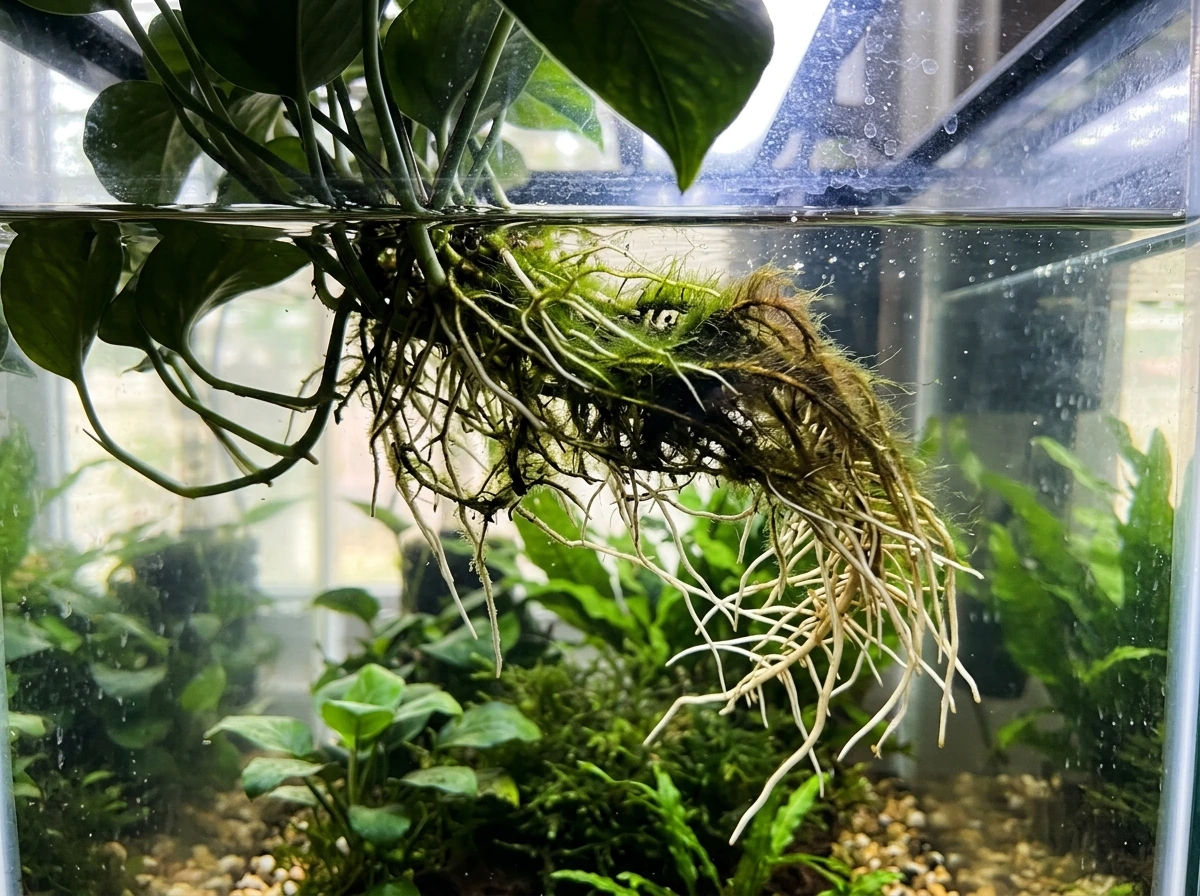
Algae loves the same conditions pothos roots sit in: nutrient-rich water and any available light. If light reaches the root zone, algae will grow on the roots. This can suffocate them over time. The fix is to block light from reaching the submerged root area, use an opaque container, wrap the net pot in dark tape, or position the plant so the root zone stays shaded. If algae does build up on roots, a gentle rinse with tank water during a maintenance session is usually enough to knock it off.
Troubleshooting common problems
Yellow leaves
Yellow leaves usually mean one of three things: too little light reaching the foliage, a leaf that was touching water and is rotting, or a nutrient imbalance. Check that no leaves are submerged or sitting at the waterline. Move the plant to a brighter (but still indirect) light position if the yellowing is widespread. In a newly set up tank with few fish, low nitrogen can also slow growth and cause pale coloring, be patient as the tank matures.
Root rot
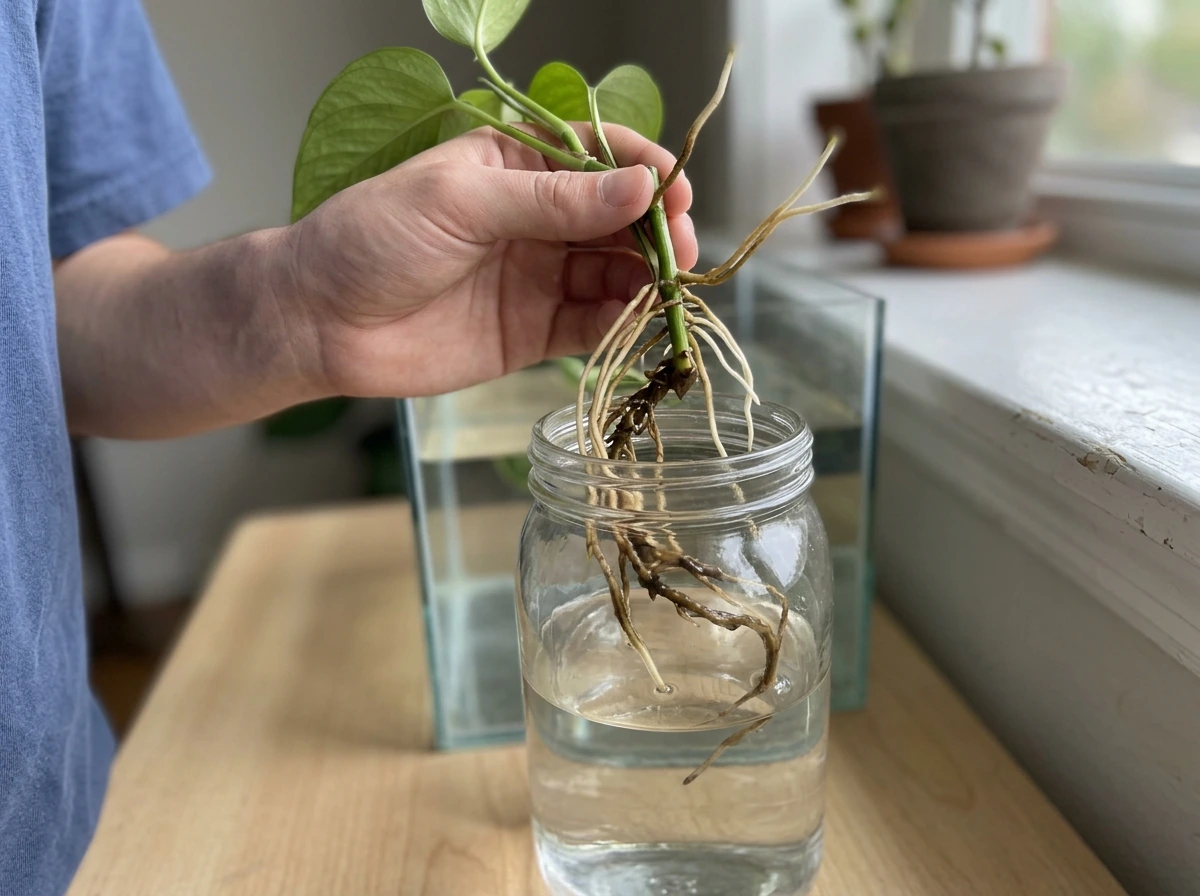
Brown, slimy, mushy roots are root rot. This usually happens when the stem base is sitting in water (not just the roots), water flow is too low around the roots, or the cutting was placed in the tank before rooting properly. Remove the plant, trim the rotted root sections back to healthy white tissue with clean scissors, and reposition so only roots are submerged. Improve water circulation if flow is low. Starting with a pre-rooted cutting (rooted in a jar first) dramatically reduces this risk.
Slow or stalled growth
If the plant has been in your tank for more than a month with no new leaf or root growth, check light first (leaves need it), then water temperature (below 65°F slows things significantly), then nutrient availability (lightly stocked tanks may not provide enough nitrogen). A small dose of diluted liquid fertilizer can help confirm whether nutrients are the limiting factor, if the plant perks up within a week or two, you have your answer.
Algae on roots
Green or brown algae coating the roots is common in tanks with excess light reaching the water. Reduce light exposure to the root zone (shade it), review your tank's light duration (10+ hours per day is often too much in a nutrient-rich tank), and do a manual rinse of the roots during your next water change. Persistent algae problems usually trace back to too much light combined with high nitrates.
Pests
Common houseplant pests like mealybugs or spider mites can appear on the leaves above the tank. Treat them with the mildest effective method (a damp cloth wipe, neem oil applied carefully to leaves only) and make sure no treatment products drip into the aquarium water, many pesticides and even neem oil can harm fish and invertebrates. The aquatic root environment below the waterline is generally pest-free.
Compatibility and safety with your fish and tank ecosystem
Pothos is safe to use in aquariums from a water-quality standpoint when set up correctly. The roots are inert and don't leach harmful compounds into the water. The plant actively improves water quality by absorbing nitrates and ammonia, which benefits fish directly.
The one safety flag worth noting: pothos contains insoluble calcium oxalate crystals, which make it toxic if ingested by pets (dogs and cats especially). This matters for the leaves and stems above the tank. If you have cats who like to chew plants near the aquarium, position the pothos out of their reach or choose a different plant for that setup. The submerged roots don't pose a documented risk to fish, hobbyists have run pothos-rooted aquariums long-term with no reported fish toxicity from root contact.
From an ecosystem standpoint, pothos plays nicely with most community fish, shrimp, and snails. Its roots can even become a surface for beneficial bacteria colonization, adding a small amount of biological filtration capacity. Some shrimp keepers specifically add pothos because shrimp graze biofilm off the roots. It's a genuinely positive addition to most freshwater setups.
The only compatibility concern is with fish that are very sensitive to any water chemistry fluctuation. If your tank has extremely precise parameters for sensitive species, introduce pothos gradually and monitor water parameters for the first two weeks to confirm stability. In practice, most tanks see flat or improved water quality after adding pothos, not worse.
Your starter plan: do this today
- Take or buy a pothos cutting with at least two nodes. Remove any leaf that would sit at or below the waterline.
- Place the cutting in a clear jar of clean water on a bright windowsill (no direct sun). Change the water every 2 to 3 days.
- Wait 3 to 4 weeks until roots are 4 to 5 inches long. You'll likely see root buds within the first week or two.
- Set up your anchor point on the tank: a suction cup clip, a net pot holder, or a DIY PVC rim rest. Position it so roots will hang into the water and the stem base clears the waterline by at least an inch.
- Transfer the rooted cutting into the aquarium setup. Shade the root zone from direct light to prevent algae.
- Check for new leaf growth and root development over the next 2 to 4 weeks. Once you see active growth, the plant is established.
- Prune roots if they grow too dense, and trim yellow or damaged leaves as needed. Continue your normal water change schedule.
If you're already growing other plants in your fish tank or thinking about expanding into a more planted setup, pothos pairs well with floating plants and emergent stem plants that also keep foliage above the waterline. The same semi-aquatic principles apply across a lot of species, and once you have the hang of managing the waterline zone, adding more plants gets much easier.
FAQ
Can I keep pothos fully submerged if I want a cleaner look?
It usually won’t last. Submerged leaves rot and can foul the water. If you want a tidy look, keep only the roots in the water and keep the stem base above the surface (raise it slightly if your clip touches the waterline).
What is the best plant height so the waterline does not cause rot?
Aim for the stem base to sit about 1 to 2 inches above the waterline, with roots dangling below. If you use a suction clip, leave enough slack so the stem cannot sink back down when the water level drops or the filter flow shifts.
How do I stop algae from growing on the submerged pothos roots?
Block light to the root zone. Use an opaque net pot or wrap the pot area in dark tape, and position the plant so the root area is shaded. If algae already appears, rinse the roots gently with tank water during maintenance and reduce light duration feeding.
Does pothos need fertilizer in a fish tank?
In a typical fish tank, you usually do not need to dose fertilizer because fish waste provides the nitrogen. If the tank is fish-free or lightly stocked, growth may stall, and a very diluted liquid fertilizer every 4 to 8 weeks can help, but keep it low to avoid algae spikes.
Will pothos work in a tank without fish (or with very few fish)?
Yes, but nutrient input is the limiting factor. With few waste sources, you may see slower growth and paler leaves. If you go that route, consider whether you want to add a controlled nutrient source (light dosing) and watch algae closely.
How much light should pothos get when it is growing above the tank?
Medium to bright indirect light is usually enough, typically matching an 8 to 10 hour aquarium light cycle if leaves are in that light path. If leaves are off to the side, add a grow light or reposition, because low light mostly slows growth and reduces new leaf production.
Do I need strong water flow around the roots?
No, but you should avoid truly stagnant pockets. Gentle circulation around the root area helps prevent anaerobic conditions and root rot. If your tank has low flow, confirm there is enough surface agitation so oxygen exchange stays healthy.
What water parameters should I watch beyond pH?
Stable water quality matters more than exact pH. Pothos tolerates a broad pH range, but large swings can reduce nutrient uptake. Also keep an eye on nitrate and ammonia trends, because pothos relies on nitrogen compounds present in the water.
How fast should pothos start growing after adding it to the aquarium?
Expect rooting first, then visible leaf growth after the root system is established. If you see no new leaves or meaningful root expansion after about a month, check light and temperature first, then consider whether nutrient availability is too low (common in understocked tanks).
Is it better to root pothos in a jar first or cut and plant directly in the tank?
Rooting in a jar first is lower risk because roots start healthy before they face aquarium conditions. Direct cutting can work, but it can take longer to establish and is more likely to fail if the cutting is dislodged before anchoring.
How do I know if I have root rot versus normal aging?
Root rot usually looks brown and slimy, with mushy, collapsing sections, often tied to the stem base sitting in the water or poor circulation. Healthy roots stay firm. If rot is suspected, remove the plant, trim to white healthy tissue, and reposition so only roots are submerged.
Should I trim pothos roots in a fish tank, and how often?
Trim only when the root mass becomes too dense for your tank size or starts blocking flow. Check root length every few weeks. Pothos generally regrows quickly after root pruning, but do not do repeated large trims in a short period.
Can pothos harm fish or shrimp?
When used correctly (roots submerged, leaves above), it is generally considered safe from a water-quality standpoint. The main caution is ingestion risk for pets chewing the above-water plant parts, because pothos contains insoluble crystals that can be toxic if eaten.
What should I do if pothos leaves turn yellow after I set it up?
Yellowing commonly comes from insufficient light, leaves touching or sitting at the waterline and rotting, or nutrient imbalance. First verify no leaves are submerged and that foliage is receiving the aquarium light path. If yellowing is widespread, move to brighter indirect light.