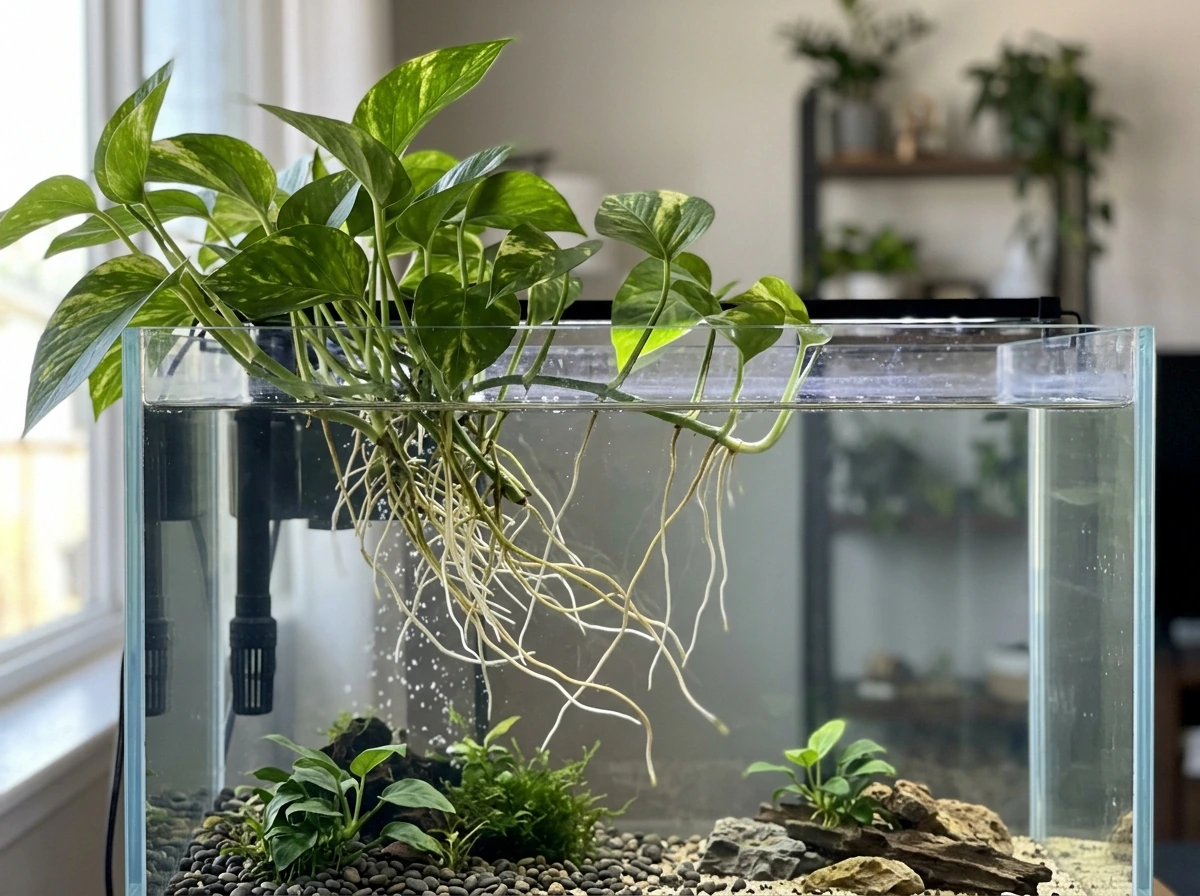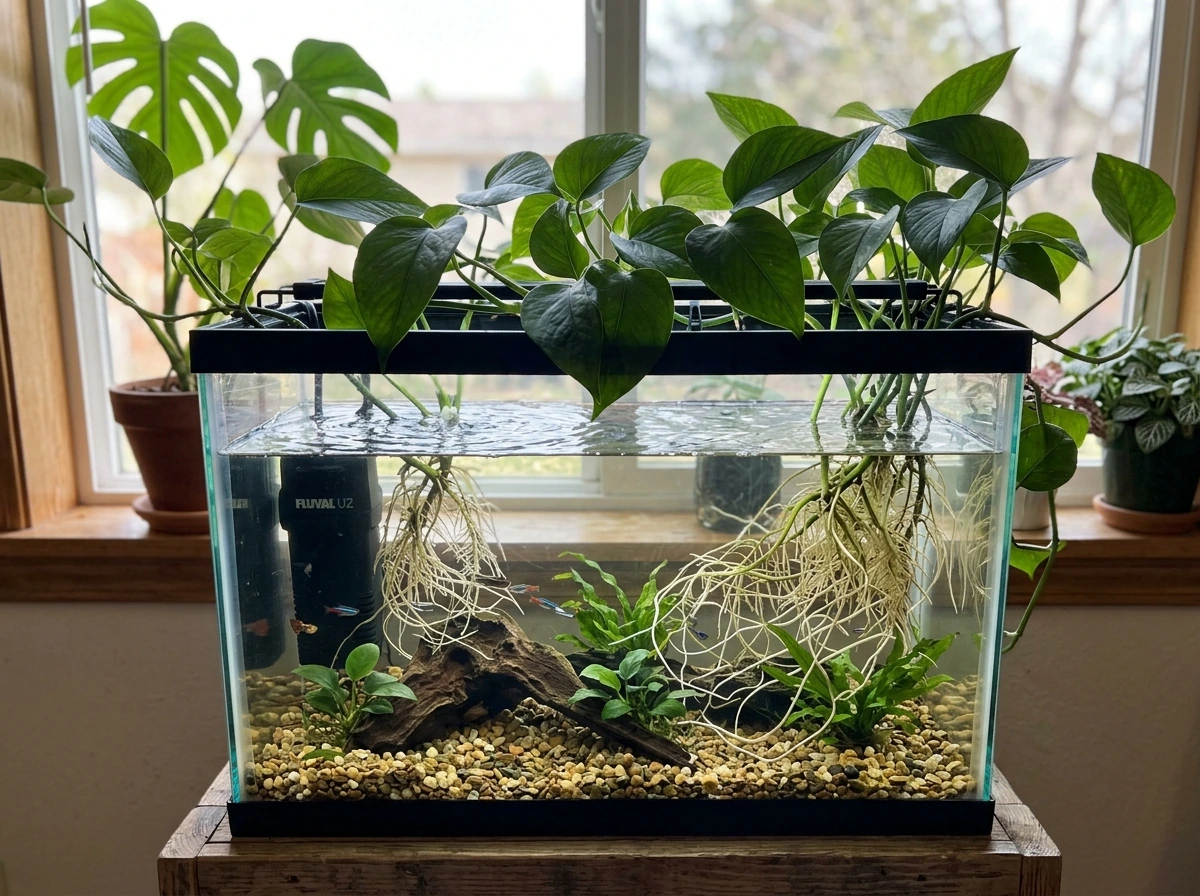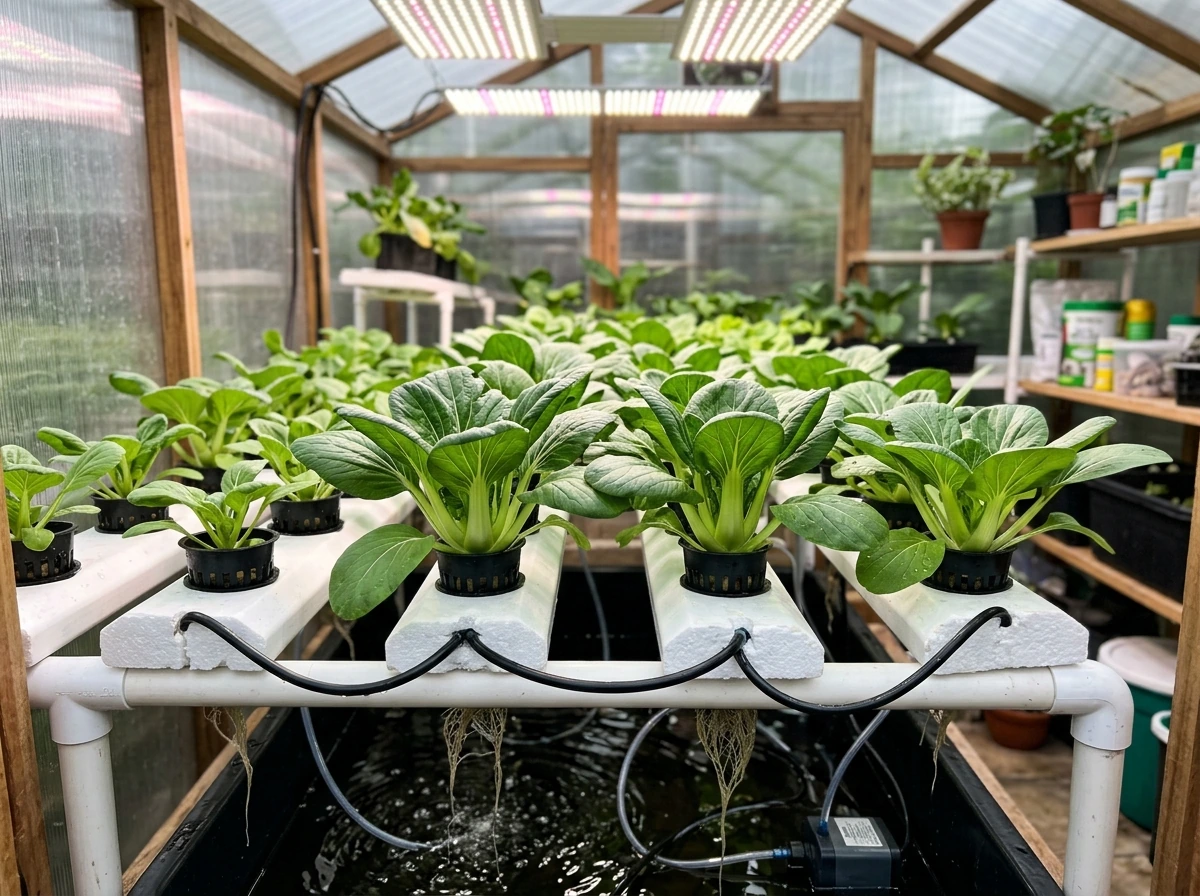
Yes, you can grow fennel in water, and it works better than most people expect, this [hydroponic how to grow aloe vera hydroponically](/hydroponic-growing/how-to-grow-aloe-vera-hydroponically) approach uses deep water culture (DWC) or a simple hydroponic container. The short version: use a deep water culture (DWC) or simple hydroponic container, keep your pH between 6.4 and 6.8, run your nutrient solution at an EC of 1.0 to 1.4, give it at least 12 to 14 hours of light per day, and start from cuttings if you want results fast. That said, there are a few honest caveats worth knowing before you fill your first container.
How to Grow Fennel in Water: A Beginner Hydroponic Guide
Marcus Holloway
24 Mar 2026
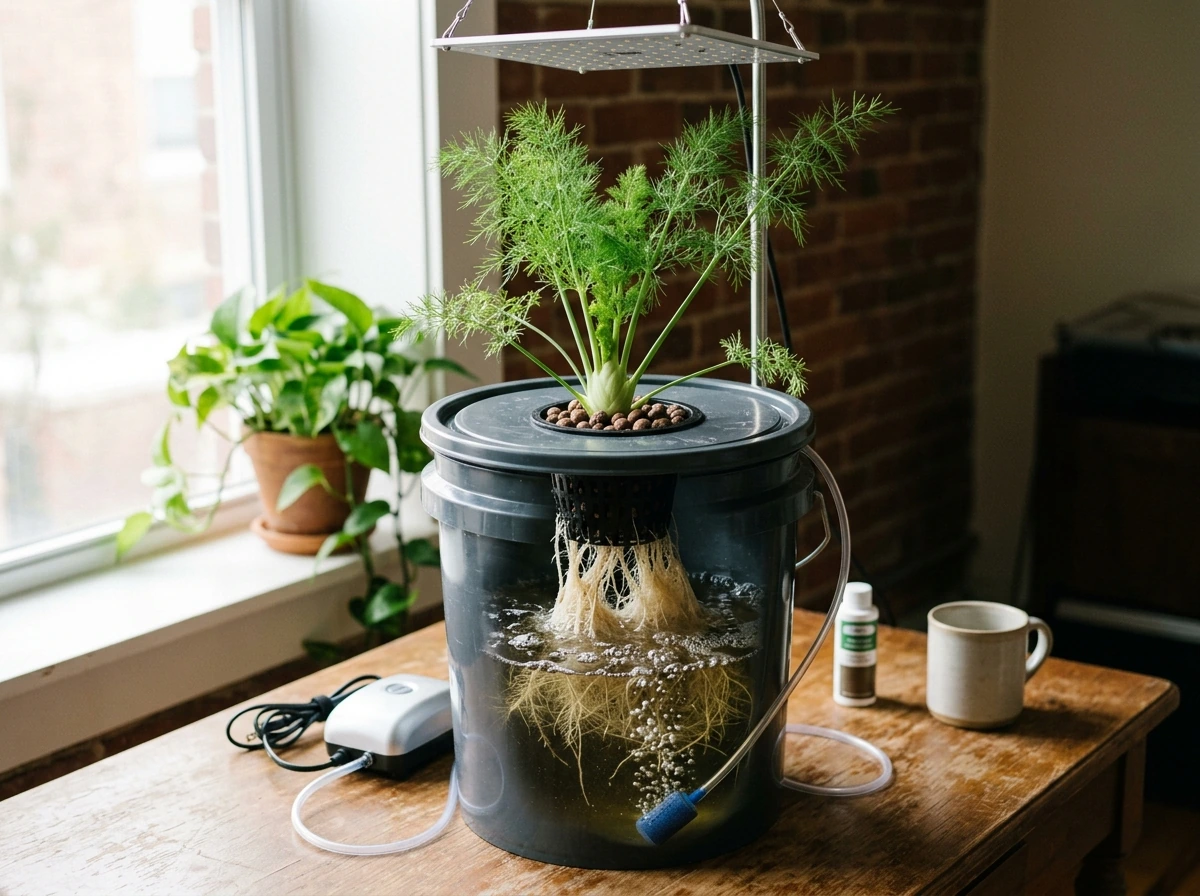
Fennel is a naturally deep-rooted, sun-loving Mediterranean herb. Growing it in water is totally doable, but it does behave a little differently than in soil. The fronds and stems thrive. The bulb is the tricky part. Florence fennel (the bulbing type) can develop a bulb in a water system, but it tends to be smaller and less dense than a soil-grown one. If fronds and stems are what you are after, water culture is genuinely excellent. If a big bulb is the goal, manage your expectations or consider a hybrid approach. Now let's get into it.
Which Fennel Varieties Work Best in Water
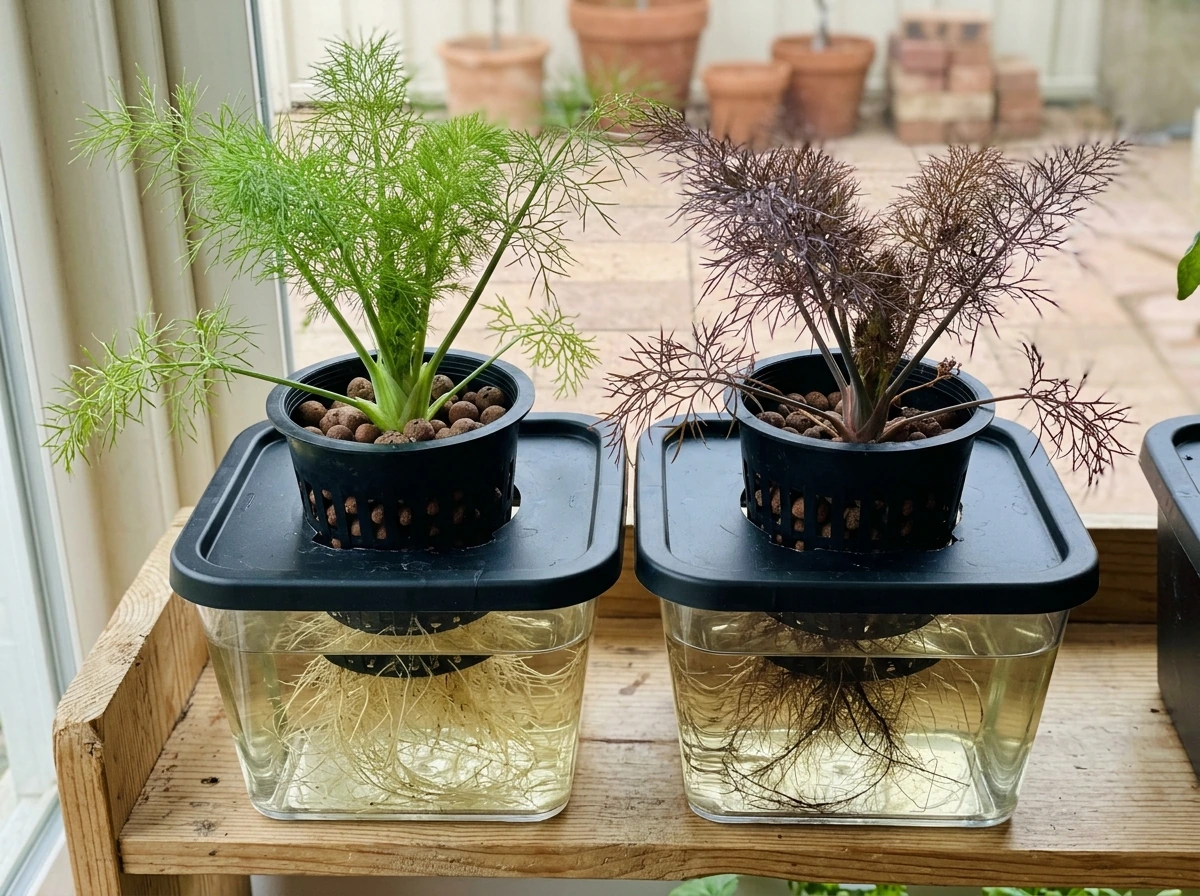
Not all fennel is the same, and your variety choice will change what you are realistically harvesting. There are two main categories to choose from: herb-type fennel (grown for fronds, stems, and seeds) and Florence fennel (grown for the swollen bulb at the base). Both can be grown in water, but they suit different goals.
Herb-type fennel (the best choice for water growing)
Common green fennel and Bronze Fennel are the two you will see most often sold as herb types. Bronze Fennel specifically is prized for its feathery, copper-toned fronds that taste just like regular fennel but look beautiful on a windowsill or in a growing setup. Both varieties produce abundant fronds in hydroponic and DWC conditions. They are fast-growing, forgiving with water culture, and can be harvested continuously. If you want a productive, low-frustration fennel plant in water, start with a herb-type variety.
Florence fennel (doable, but manage expectations)
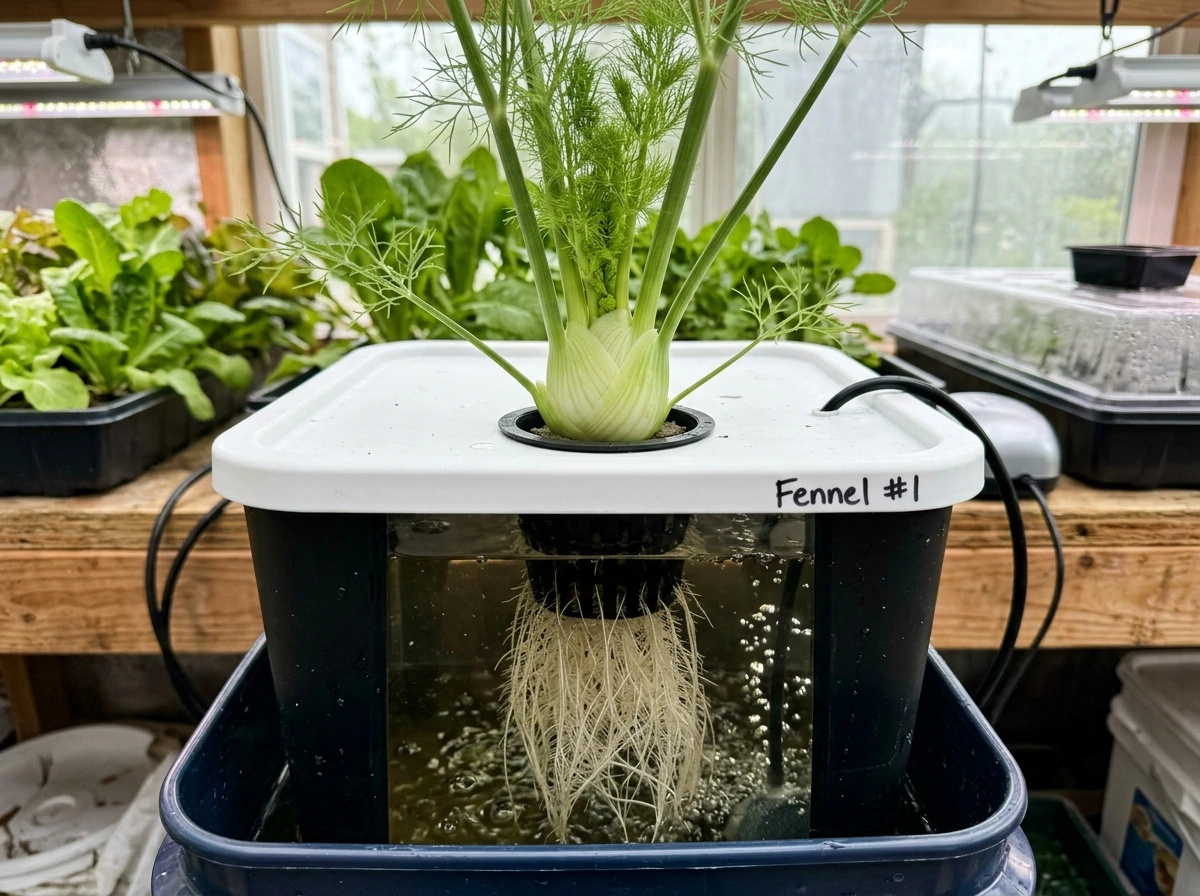
Florence fennel (also called finocchio) is what you see in grocery stores, the white bulb variety. It can be grown in a DWC or hydroponic system, but the bulb development depends a lot on consistent spacing, support, and a stable root environment. In my experience, water-grown Florence fennel produces a usable bulb, but it may take longer and be smaller than you are used to seeing in soil. If you want to try it, go for it, but plan to give the plant more lateral space than you think it needs, and do not skip the support structures.
| Variety | Best For | Water Culture Performance | Harvest |
|---|---|---|---|
| Common Green Fennel | Fronds, stems, seeds | Excellent | Fronds in 3 to 4 weeks from cuttings |
| Bronze Fennel | Fronds, ornamental use | Excellent | Fronds in 3 to 4 weeks from cuttings |
| Florence Fennel | Bulb + fronds | Good for fronds, moderate for bulb | Bulb in 10 to 14 weeks from seed |
Setting Up Your Water System for Fennel
The most beginner-friendly system for growing fennel in water is deep water culture (DWC). In DWC, roots hang directly into an oxygenated, nutrient-rich water reservoir. It is simple to build, cheap to maintain, and scales easily from one plant to a dozen. You can also use a basic Kratky method (a passive DWC with no air pump) for herb-type fennel, though the air pump version produces faster, healthier growth for a plant as vigorous as fennel.
What you need to set up
- A food-safe container or bucket: 3 to 5 gallons per plant for Florence fennel, 1 to 2 gallons per plant for herb types
- Net cups (2-inch or 3-inch diameter) to hold the plants and growing medium
- Hydroton (clay pebbles) or rockwool cubes as the growing medium inside the net cups
- An air pump and airstone to oxygenate the water (essential for preventing root rot in fennel)
- A hydroponic nutrient solution (any general-purpose A+B formula works)
- pH test kit or digital pH meter
- EC meter (also called a TDS meter) to measure nutrient concentration
- pH up and pH down solutions for adjustments
- A light-blocking lid or paint your container black to block algae growth
Keep the reservoir water level about 1 inch below the bottom of the net cup once roots have established. That air gap matters: fennel roots need access to oxygen, and sitting in water 24/7 with no air gap is the fastest way to get root rot. Initially, when plants are young and roots have not yet reached the reservoir, you can fill higher so moisture wicks up through the growing medium.
System hygiene from day one
Fennel is sensitive to bacterial buildup in the reservoir, more so than something like lettuce or basil. Rinse your container and airstone thoroughly before your first use. Every time you top off or replace the reservoir, wipe down the inside walls. Change the full nutrient solution every 7 to 10 days rather than just topping off indefinitely. This habit alone will prevent most of the root problems beginners run into.
Propagating Fennel in Water: Seeds vs. Cuttings
There are two ways to start fennel in a water system: from seed, which is the only option for Florence fennel, or from cuttings taken from an existing plant, which works well for herb-type fennel and gets you to harvest much faster. Here is exactly how to do each.
Starting from seed (required for Florence fennel, also works for herb types)
- Soak fennel seeds in plain water for 12 to 24 hours before planting. This softens the seed coat and speeds up germination.
- Place 2 to 3 seeds into a pre-soaked rockwool cube or wrap them in a damp paper towel. Keep them in a warm spot (65 to 75°F is ideal) away from direct light.
- Check daily and keep the medium moist. Fennel seeds typically germinate in 7 to 14 days. If using a paper towel, move sprouted seeds to rockwool or directly into a net cup with hydroton once the tap root is about half an inch long.
- Place the net cup into a shallow tray or container with just enough plain water (no nutrients yet) to wick moisture up to the seeds. Do not submerge.
- Once seedlings have their first set of true leaves (usually 10 to 14 days after germination), switch to a diluted nutrient solution at half the recommended EC (around 0.5 to 0.7) to avoid nutrient burn on young roots.
- Thin to one seedling per net cup once plants reach 2 to 3 inches tall. Fennel does not like competition, even in water.
Starting from cuttings (fastest method for herb-type fennel)
- Cut a healthy stem from an existing fennel plant, 4 to 6 inches long. Cut just below a node (where a branch or leaf meets the stem).
- Strip the lower leaves so the bottom 2 inches of stem are bare. Leaves left in water will rot and foul your setup quickly.
- Place the cutting in a clean glass or jar of plain water. Keep it in indirect light (a bright windowsill but not direct sun) at room temperature, around 65 to 72°F.
- Change the water every 2 days. This is non-negotiable for cuttings: stagnant water grows bacteria fast and kills the cutting before roots form.
- Roots typically appear in 7 to 14 days. Wait until roots are at least 1 inch long before moving the cutting into your DWC system.
- Transfer the rooted cutting into a net cup with hydroton, and lower it into your nutrient reservoir. Start at half-strength nutrients for the first week, then ramp up to full EC (1.0 to 1.4) once the plant is visibly growing.
One thing I learned the hard way: do not try to root fennel cuttings in the same container you plan to use as your final DWC reservoir. The stirring and water changes needed for rooting will disturb established plants if you are sharing the vessel. Keep propagation separate, then transfer.
Nutrients, pH, EC, Light, and Temperature
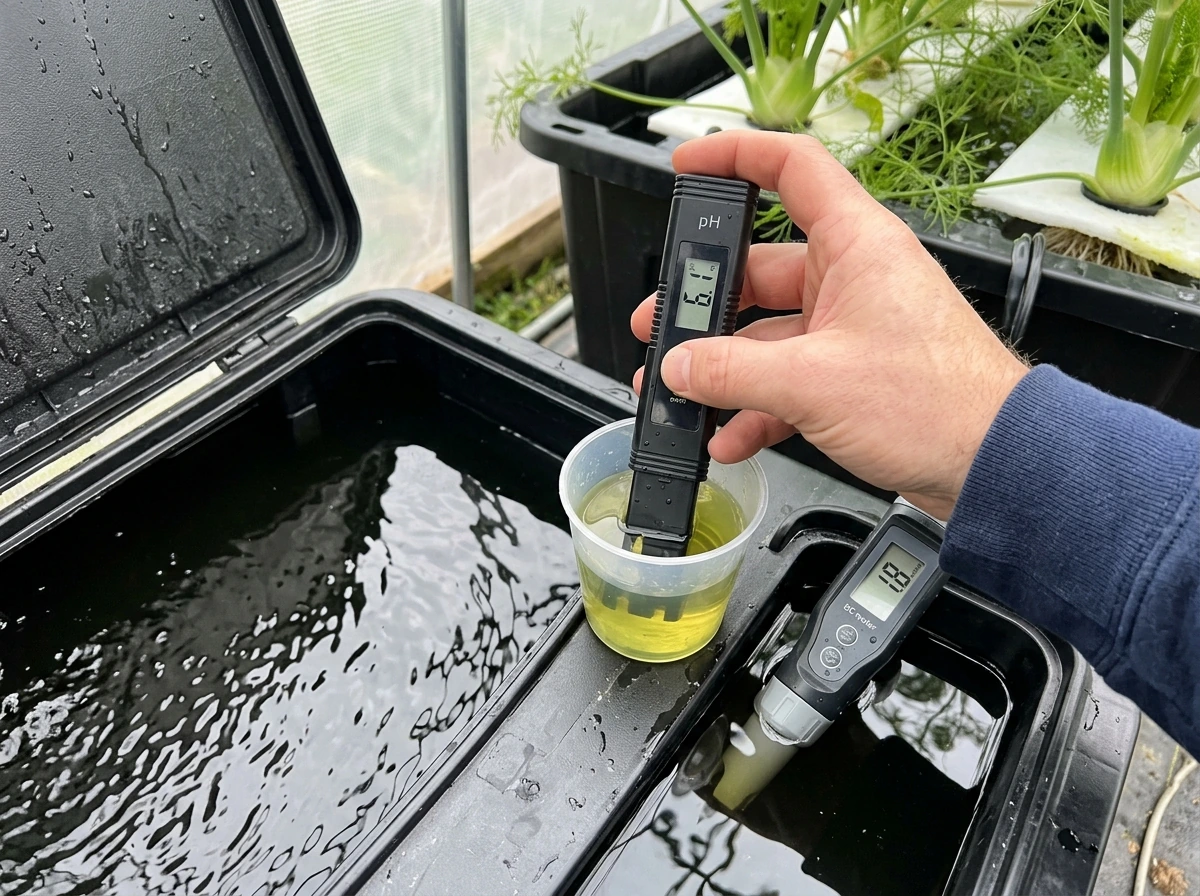
This is where the difference between "fennel surviving in water" and "fennel actually thriving" comes down to. Get these numbers dialed in and the plant almost takes care of itself.
Nutrient solution: what to use and how much
Fennel needs a complete hydroponic nutrient solution, not just plain water. Plain water (even filtered or spring water) will keep a cutting alive for a short time, but you will see stunted growth and yellowing within a few weeks without added nutrients. If you want to learn more about how to grow aeroponics, you can compare how nutrient delivery differs. how to grow flowers hydroponically Use any quality hydroponic two-part or three-part nutrient concentrate (brands like General Hydroponics Flora Series, Masterblend, or similar work well). Mix according to package directions, then measure your EC. how to grow pechay in hydroponics
| Parameter | Target Range | Why It Matters |
|---|---|---|
| pH | 6.4 to 6.8 | Keeps nutrient ions available for uptake; outside this range plants lock out key minerals |
| EC (nutrient concentration) | 1.0 to 1.4 mS/cm | Provides enough nutrition without burning roots; seedlings start at 0.5 to 0.7 |
| Water temperature | 65 to 72°F (18 to 22°C) | Warmer water holds less oxygen and promotes root rot; cooler slows growth |
| Air temperature | 60 to 75°F (15 to 24°C) | Fennel is a cool-season plant; heat above 80°F triggers bolting |
Check pH every 2 to 3 days and adjust with pH up or pH down solution. Fennel's roots actively change the pH of the reservoir as they absorb nutrients, so drift is normal and expected. An EC reading that drops significantly between changes means the plant is feeding well; an EC that holds steady but pH shifts dramatically can mean roots are stressed. Both are useful signals.
Light requirements
Fennel is a full-sun plant. In a water setup indoors, you need to compensate with grow lights. Aim for 12 to 16 hours of light per day. Full-spectrum LED grow lights work well at a distance of 12 to 18 inches above the canopy. If you are growing on a south-facing windowsill with strong natural light, supplement with a few hours of artificial light in winter or cloudy periods. Insufficient light is the most common reason for leggy, weak fennel in water systems.
Keeping Your Fennel Productive: Harvesting, Pruning, and Routine Care
Once your fennel is established in the system, the routine is pretty low-effort if you keep up with a few key tasks.
Harvesting fronds
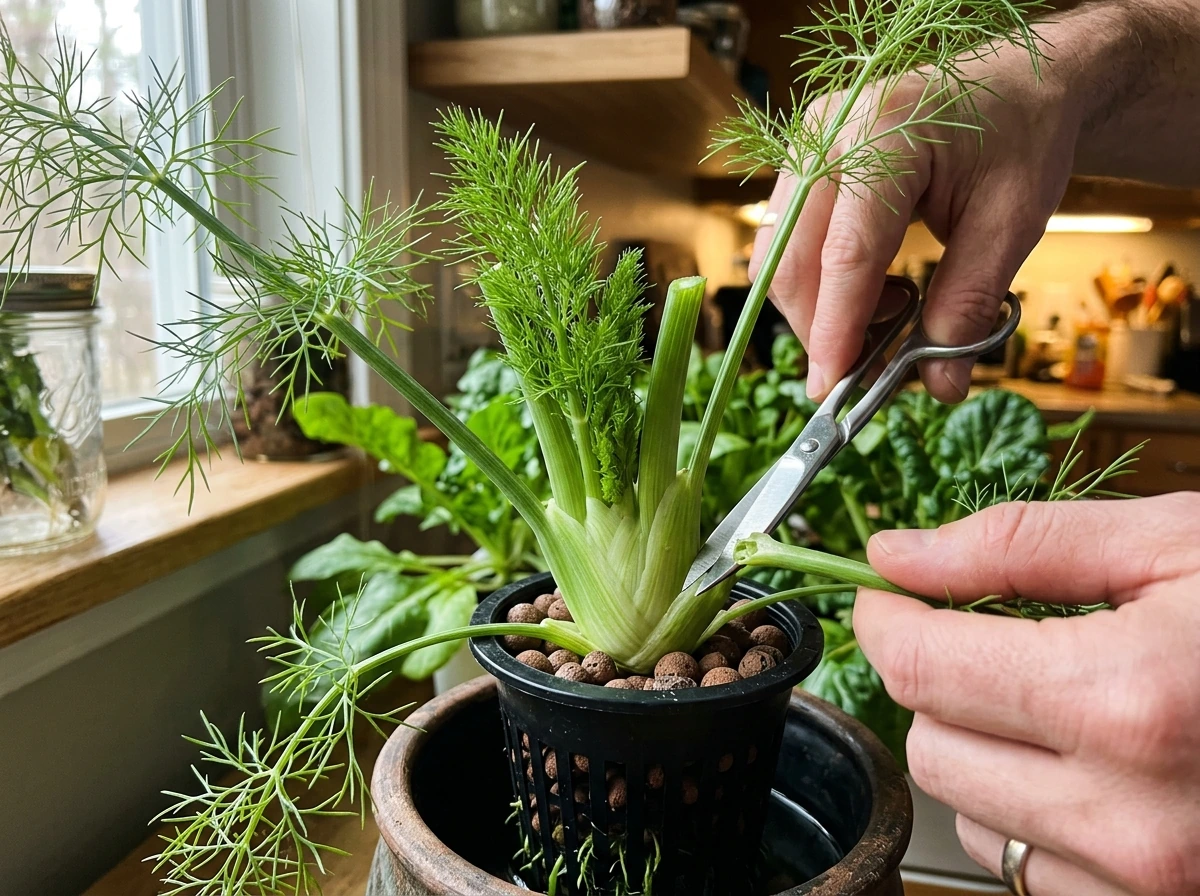
Start harvesting fronds once the plant is at least 8 to 10 inches tall. Cut outer fronds at the base of their stems, leaving the central growing tip and inner stems intact. Never take more than one-third of the plant at a time. Regular, light harvesting actually encourages the plant to keep producing. If you stop harvesting and let it grow unchecked, fennel will bolt (go to flower and seed), which changes the flavor of the fronds and signals the end of the productive vegetative phase.
Weekly care routine
- Check water level and top off with plain pH-adjusted water (not nutrient solution) between full reservoir changes
- Measure and log pH every 2 to 3 days; adjust if outside the 6.4 to 6.8 range
- Check EC weekly; replace the full reservoir every 7 to 10 days
- Inspect roots visually: healthy fennel roots are white or pale cream; brown or slimy roots are a warning sign
- Remove any dead or yellowing leaves from the system immediately to avoid fouling the water
- Wipe any algae from the inside of the reservoir lid or walls during water changes
Spacing and support
Give each fennel plant at least 8 to 12 inches of horizontal space in your system. Florence fennel especially needs room for the bulb to develop without being crowded. Tall herb-type fennel plants may need a simple stake or cage to keep them upright as they grow, since the water system does not offer the soil stability the plant is used to. A bamboo stake tied loosely to the stem works fine.
Transitioning young plants within the system
If you started seeds or cuttings in a propagation tray or small container, move them into the main reservoir once roots are at least 1 to 2 inches long and the seedling or cutting shows active new growth. Do this gently during your next reservoir change so the roots experience minimal pH and EC disruption. Acclimate slowly by starting the transferred plant at half-strength nutrients for the first 5 to 7 days in the new vessel.
Troubleshooting: What to Do When Things Go Wrong
Most problems in water-grown fennel come down to one of six things: root rot, foul smell, yellowing leaves, stunted growth, algae, or nutrient imbalance. Here is how to read the signs and fix them.
Root rot and foul smell
This is the most common killer in beginner DWC setups. Signs include brown, mushy roots and a sulfur or swamp smell from the reservoir. Causes are almost always one of three things: water temperature too high (above 72°F), insufficient aeration, or reservoir left unchanged too long. Fix it by draining the reservoir completely, rinsing roots gently in clean water, trimming away visibly dead root tissue with sterilized scissors, and refilling with fresh nutrient solution. Add a few drops of hydrogen peroxide (3% food-grade, about 3 ml per gallon) to the new reservoir to help clear anaerobic bacteria. Check that your airstone is running properly and that the water temperature is in range.
Yellowing leaves
Yellow leaves on water-grown fennel are usually a sign of one of three issues: pH out of range causing nutrient lockout, EC too low (plant is underfed), or roots being waterlogged without enough air. Check pH first since it is the most likely culprit. If pH is fine, measure EC and compare to your target of 1.0 to 1.4. If EC is low, mix a fresh nutrient solution at proper strength. Old lower leaves yellowing slightly while upper leaves stay green is normal and not a concern.
Stunted or slow growth
If your fennel has been in the system for more than 3 weeks and has barely grown, light is the first thing to check. Fennel needs real intensity, not just ambient indoor light. If light is sufficient, check water temperature (cold water below 60°F significantly slows root activity) and EC (too low means the plant is underfed). Also verify that the air pump is running: without oxygenation, roots cannot absorb nutrients effectively even if the solution is perfect.
Algae buildup
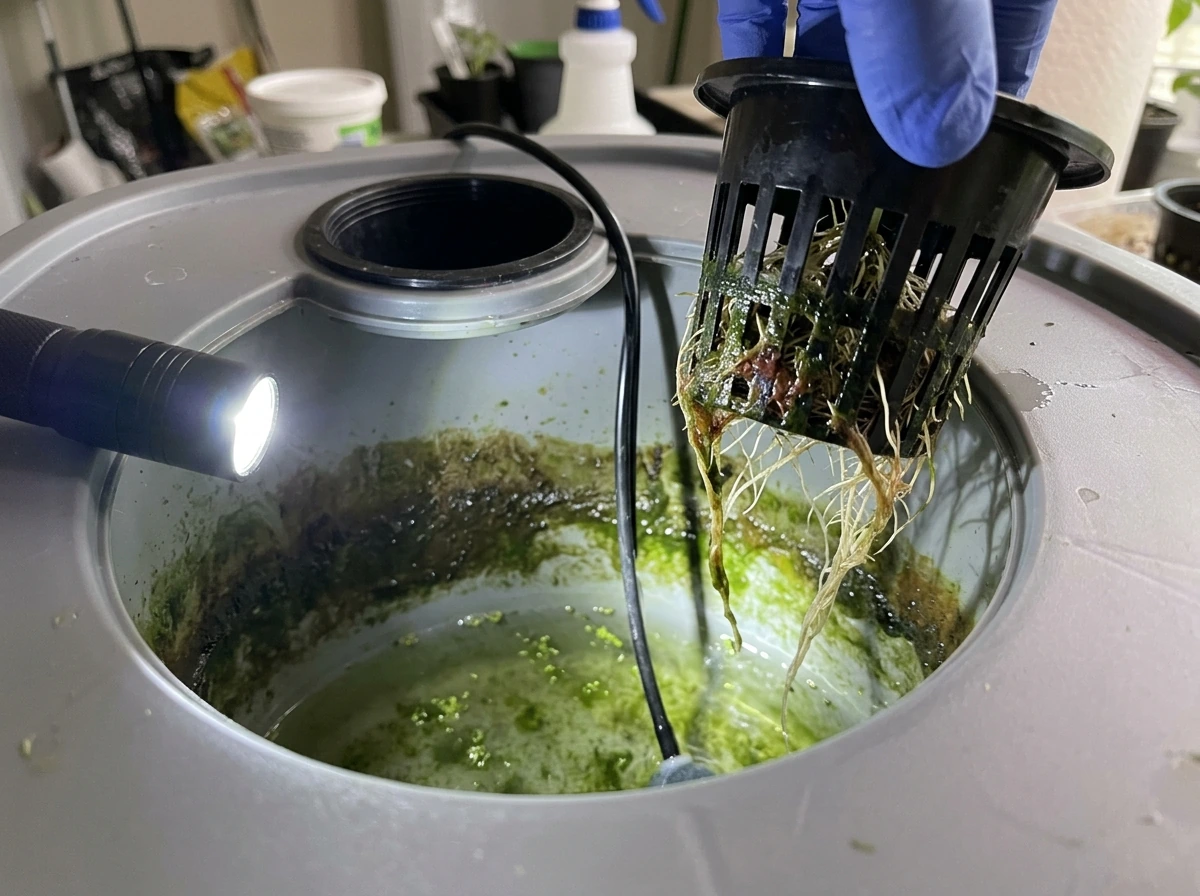
Green or brown algae growing on the inside of your reservoir or on the root zone means light is getting in. Algae competes with your plant for nutrients and oxygen, and in bad cases it can suffocate roots. The fix is simple: make your reservoir completely light-proof. Use black buckets, wrap clear containers in black tape or foil, and make sure the lid has no gaps. During water changes, wipe away any algae on the walls. Once you have blocked the light, algae stops growing.
Nutrient deficiency vs. toxicity
Deficiency signs in fennel include pale or yellow new growth (often nitrogen), purple-tinted stems (often phosphorus), and leaf edge browning (often potassium or calcium). Toxicity from too-high EC typically shows as brown leaf tips and curling. If you have been running EC above 1.6 for extended periods, flush the reservoir with plain pH-adjusted water for 24 hours, then resume at 1.0 to 1.2. If you suspect deficiency, check that pH is in range first: most apparent deficiencies in hydroponics are actually nutrient lockout from wrong pH, not a lack of nutrients in the solution.
Your Practical Starting Checklist
If you are starting today, here is what to buy, set up, and track from week one.
Get these things first
- A 3 to 5 gallon black food-safe bucket or opaque container
- 2-inch net cups and a lid drilled to fit them
- Hydroton clay pebbles (rinsed and soaked before use)
- A small air pump and airstone with tubing
- A two-part hydroponic nutrient solution
- A digital pH meter (or test drops) and pH up/down solution
- An EC or TDS meter
- Bronze or common green fennel seeds, or a cutting from a healthy plant
- A full-spectrum LED grow light if growing indoors
Set these targets on day one
- pH: 6.4 to 6.8 (adjust before adding plants)
- EC: 0.5 to 0.7 for seedlings and fresh cuttings, 1.0 to 1.4 for established plants
- Water temperature: 65 to 72°F
- Light: 12 to 16 hours per day on a timer
- Air pump: running continuously, 24/7
Check these every week
- pH reading every 2 to 3 days; adjust as needed
- EC reading once a week; top off with plain water between changes
- Full reservoir swap every 7 to 10 days
- Root color and health during each reservoir change
- Leaf color and overall plant vigor
- Algae and light leaks in the reservoir
- Water level (maintain the 1-inch air gap below net cups)
Fennel is genuinely one of the more satisfying plants to grow in a water system once you get the setup right. The fronds are fast, fragrant, and harvested repeatedly over months. If you are already exploring other water-grown herbs like methi or broader hydroponic vegetable setups, fennel fits naturally into the same system type and nutrient parameters, making it an easy addition to an existing grow. Stick to the pH and EC targets, keep that reservoir clean, and block out all the light. The plant will take care of the rest.
FAQ
Do I need to put fennel in a grow medium when growing it in water, or can I float it with bare roots?
Use a hydroponic net cup and inert support media, then keep the stem and crown above the water line. In DWC, the roots should enter the reservoir while the growing tip stays dry and oxygen-exposed, if the crown sits in water it commonly rots and the plant stops pushing new fronds.
Will Florence fennel make a good bulb in water, or is water mainly for fronds?
Florence fennel is the hardest type for water culture because bulb formation depends on stable conditions and enough lateral space. If your main goal is a dense white bulb, plan on longer grow times and consider trials in soil for bulb density, you can still use water for fronds once the plant is harvested.
How do I avoid shocking fennel when moving it from propagation to the main reservoir?
As a practical rule, aim to start with about half the labeled nutrient strength during the first 5 to 7 days after transplanting, then ramp to your target EC once new growth is clearly established. Jumping straight to full EC often triggers leaf edge burn or stalling.
Can I grow fennel in a passive Kratky container, and what changes compared to DWC?
If you use a Kratky setup, increase the chance of success by choosing herb-type fennel, starting with slightly larger rooted cuttings, and using a reservoir that will last the whole early phase. Without an air pump, oxygen delivery is limited, so you must manage water level and avoid letting the roots stay submerged too long.
What is the safest harvesting routine so fennel keeps producing in water?
Fennel often benefits from gentle leaf harvest, but you can still overdo it. Never remove more than one-third of total foliage at once, and avoid harvesting right after transplanting until the plant resumes steady growth.
My reservoir still gets algae, what causes light to get in if I covered it?
If you see algae even though you block light, check for light leaks around the lid and any gaps where the reservoir top is exposed. Also ensure you are not letting sunlight hit through thin plastic, even reflected light can feed algae.
What water temperature range is best for growing fennel in water?
Target a reservoir temperature roughly between 62 and 72°F. Below 60°F growth slows and nutrient uptake becomes inconsistent, above 72°F oxygen drops and root rot risk rises, if your room is warm, consider a shaded location or external reservoir chilling.
My pH won’t stabilize, what should I troubleshoot first in a fennel DWC system?
If pH keeps drifting rapidly, first confirm your meters are calibrated and rinsed between samples. Then check whether you are topping off without replacing solution, frequent water additions without a full change can concentrate salts and create unstable chemistry.
How can I keep a steady supply of fennel fronds instead of one big harvest?
For continuous production, stagger plants rather than relying on one long cycle. Replant cuttings every few weeks (or keep a small propagation tray going), so if one batch bolts or stalls you still have fronds ready.
Yellow leaves are happening, should I add more fertilizer or check pH and EC first?
If you notice yellowing, start by verifying pH and EC before adding extra nutrients. In hydroponics, the most common cause is nutrient lockout from pH drift, once pH is corrected, adjust EC only if it is clearly below your target.
What’s the quickest way to prevent root rot in fennel DWC, and what should I do if it starts?
Root rot prevention is mostly oxygen and sanitation, keep your water level 1 inch below the net cup base once roots reach the reservoir and fully replace the nutrient solution on schedule. If rot appears, do not reuse that reservoir and avoid trimming too aggressively, remove only clearly dead tissue with sterilized scissors.
How often should I change reservoirs, and is it safe to transplant fennel mid-cycle?
Fennel typically prefers stable conditions and may not respond well to frequent replanting. If you must move it, transfer during a reservoir change, handle roots gently, and start at half strength for a week to reduce stress and nutrient uptake swings.