Yes, you can grow methi (fenugreek leaves) hydroponically, and it works really well. Methi is a fast-growing leafy green that germinates in 2–3 days and gives you a first harvest in as little as 3 weeks. It handles water-based systems well, tolerates a range of conditions, and gives you multiple cuts before it bolts. If you have a small DWC reservoir, an NFT channel, or even a basic media-bed setup, you already have most of what you need. how to grow flowers hydroponically
How to Grow Methi Hydroponically: Step by Step Guide
Marcus Holloway
24 Mar 2026
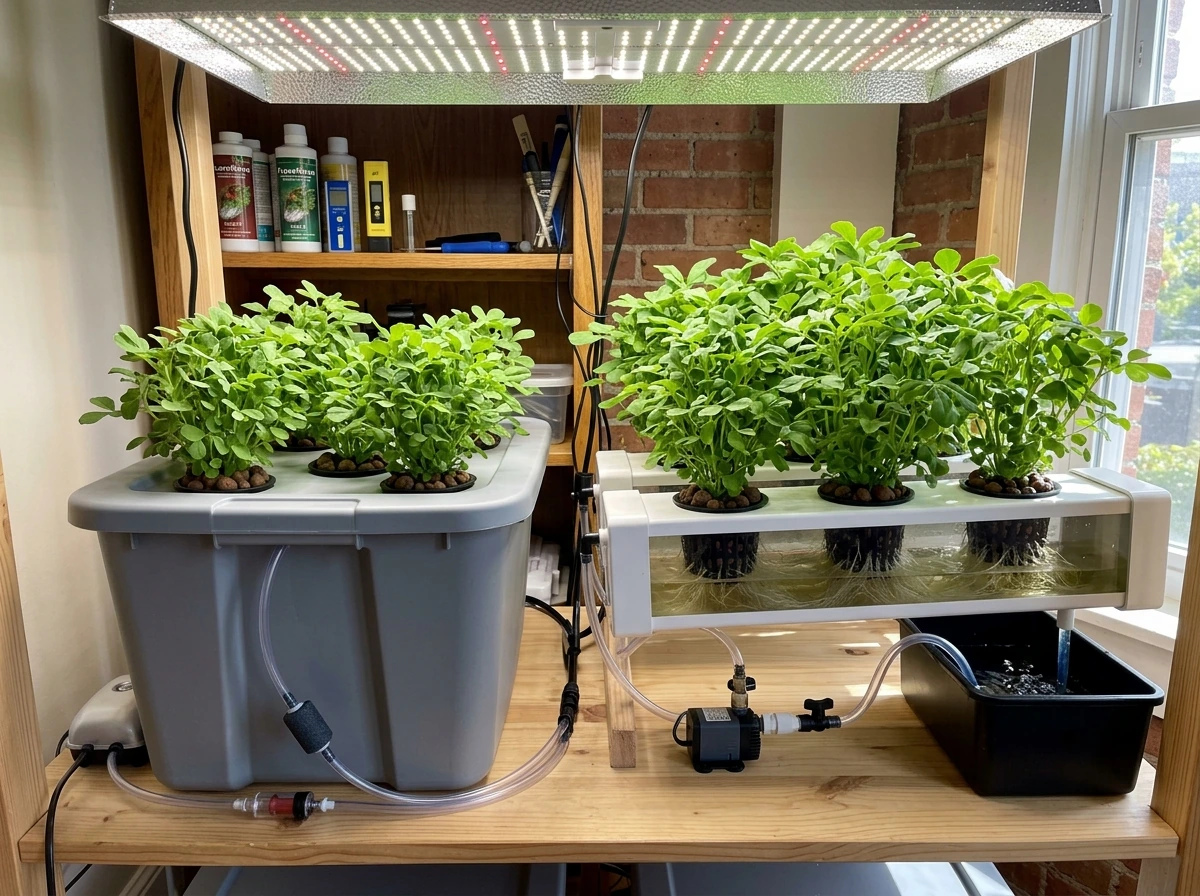
Methi basics and the right hydroponic method to use
Methi is the leaf form of fenugreek (Trigonella foenum-graecum), the same plant whose seeds are used as a spice. In hydroponic terms, it behaves like a fast leafy green, similar to spinach or cress in terms of what it needs from a system. It has a fibrous root system that works well in both floating/raft setups and media beds. It does not have the heavy root mass of tomatoes or the sensitivity of lettuce to tip burn, which makes it pretty forgiving for beginners.
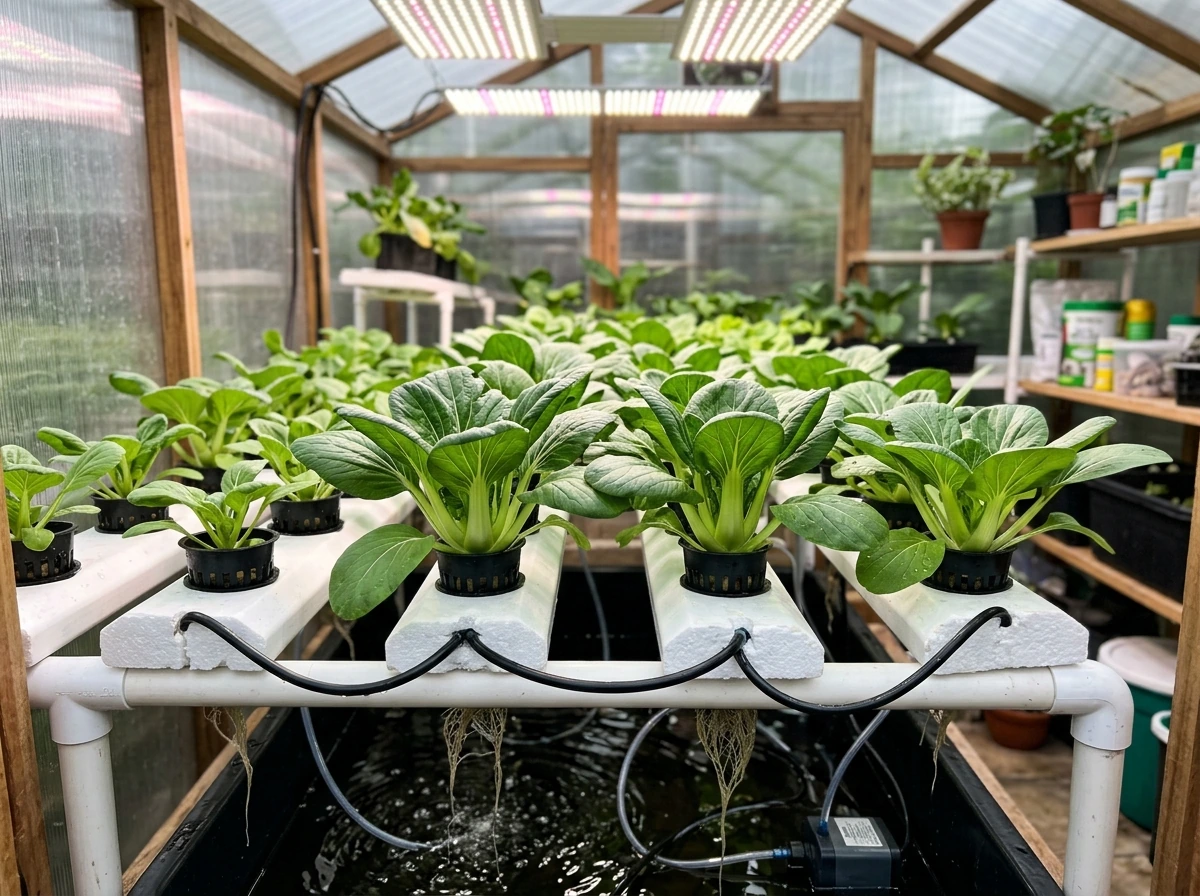
For most home growers, I recommend one of three methods. Deep Water Culture (DWC) with a raft or net-pot lid is my top pick for beginners because it is simple to set up, easy to monitor, and keeps roots consistently oxygenated and fed. Nutrient Film Technique (NFT) works great if you want higher volume or a more continuous-flow setup, and it uses less water overall. A media-based system using coco coir, perlite, or clay pebbles in a flood-and-drain or drip setup is the most forgiving if you are still getting comfortable with pH and EC management, since the media provides a small buffer.
| Method | Best For | Pros | Cons |
|---|---|---|---|
| DWC / Raft | Beginners, small batches | Simple, low cost, roots stay moist, easy to monitor | Needs constant aeration; algae risk if reservoir is exposed to light |
| NFT | Larger volume, continuous harvest | Water-efficient, good oxygenation, scalable | Roots can dry out if pump fails; slightly more complex setup |
| Media Bed (coco/perlite) | New growers, hybrid systems | Forgiving pH buffer, familiar feel, works with drip or flood-and-drain | Slower to flush and clean; media can harbor pathogens if not managed |
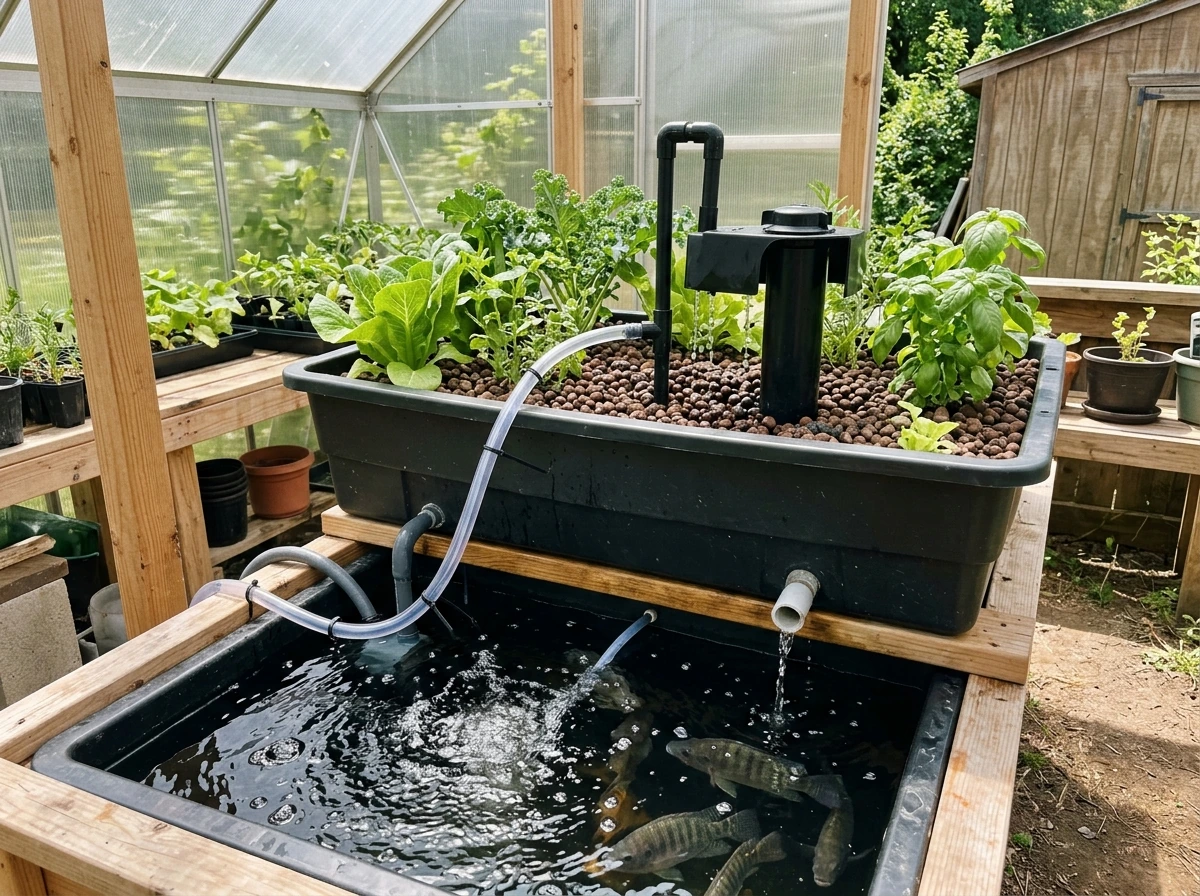
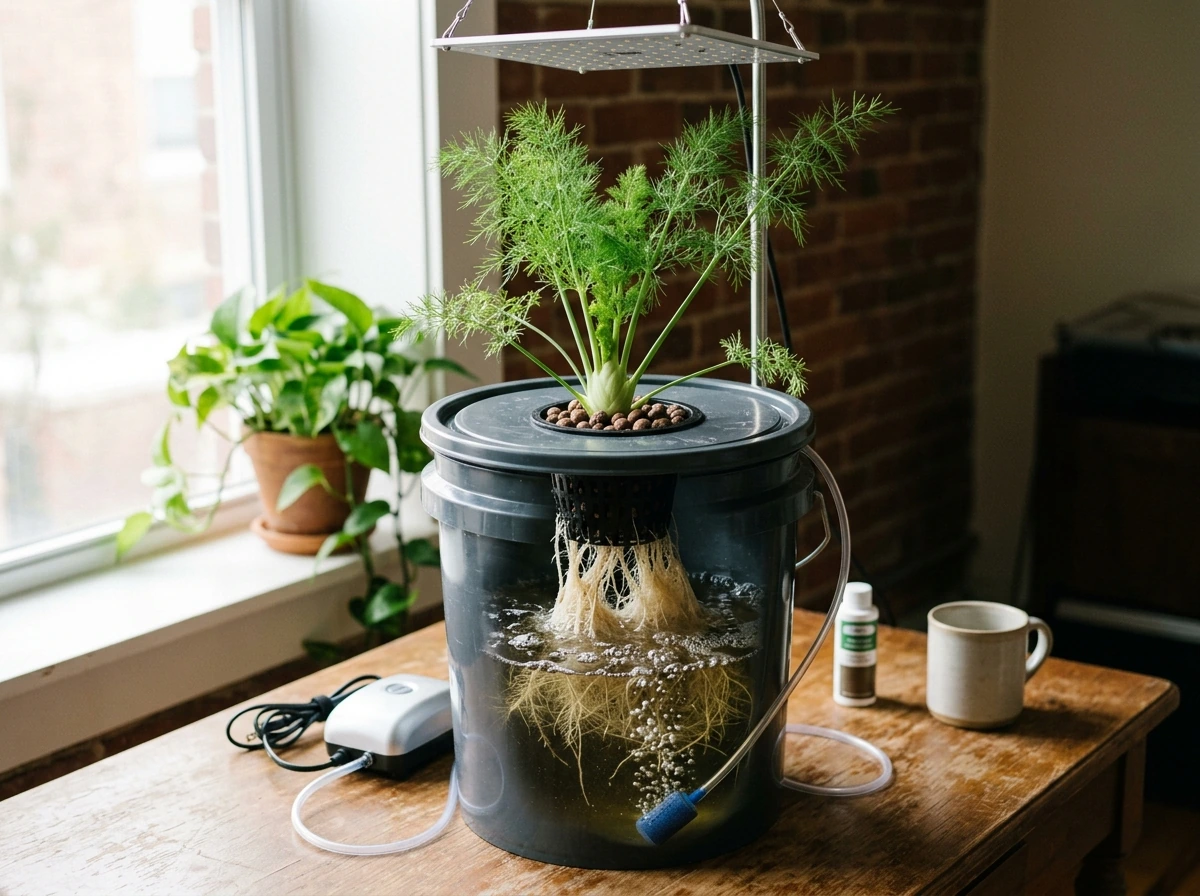
My recommendation: start with DWC if this is your first time. A single 10–20 liter tote with a net-pot lid and an air stone is all you need for a productive first run. Once you understand how methi responds to nutrients and light, stepping up to NFT is straightforward. My recommendation: start with DWC if this is your first time. A single 10–20 liter tote with a net-pot lid and an air stone is all you need for a productive first run. Once you understand how methi responds to nutrients and light, stepping up to NFT is straightforward. If you are already running an aquaponics system, methi works well as a raft crop in that context too, though nutrient levels in aquaponic water can be harder to dial in precisely.
What you need: supplies and equipment
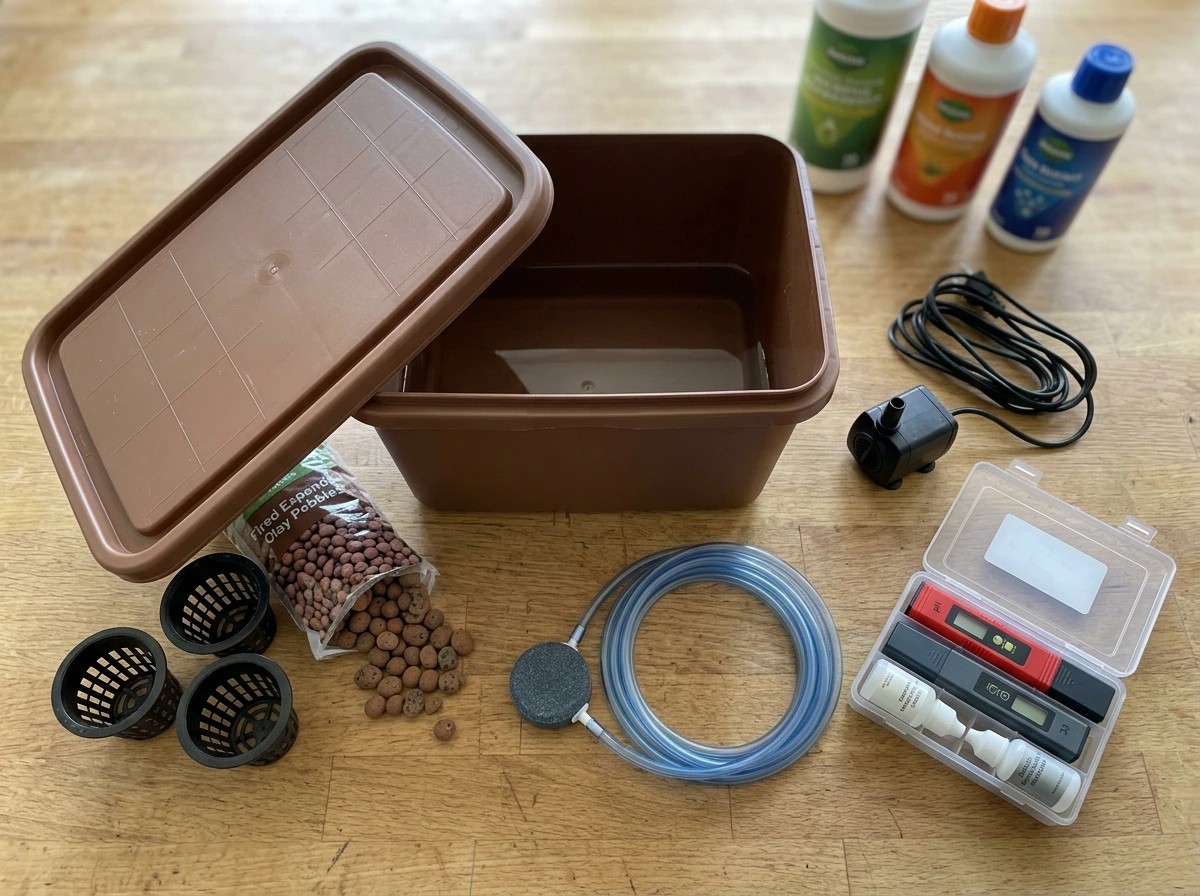
You do not need a lot to get started. Here is a practical equipment list broken into what is essential and what is a nice upgrade.
Core equipment
- Reservoir/tank: A 10–20 liter opaque tote or bucket works for a small DWC setup. Opaque is non-negotiable — light penetration causes algae.
- Net pots: 5 cm (2-inch) net pots fit most DWC lids and NFT channels; great for direct sowing methi seeds.
- Air pump and air stone: One small aquarium air pump with a 15–20 cm air stone keeps a 20-liter DWC reservoir adequately oxygenated.
- Airline tubing and check valve: Standard aquarium tubing; the check valve prevents water from siphoning back into the pump.
- Water pump (NFT or drip only): A small submersible pump rated 200–400 L/hr is sufficient for most small NFT runs.
- Growing media: Hydroton (expanded clay pebbles), coco coir, or perlite. For DWC net pots, a small amount of clay pebbles per pot is enough to anchor seeds.
- pH meter or test kit: A digital pH pen is worth the investment; accuracy matters more than convenience here.
- EC/TDS meter: A basic conductivity pen, typically under $20, to monitor nutrient strength.
- pH up and pH down solutions: Potassium hydroxide (pH up) and phosphoric acid (pH down) are the standard choices.
- Hydroponic nutrient solution: A two-part or three-part formula designed for leafy greens (more on ratios below).
- Grow lights: LED grow lights rated for the space; seedling trays can use lower-output panels.
Useful upgrades
- Thermometer/hygrometer: To monitor water and air temperature — methi grows best at 21–24°C (70–75°F).
- Timer: A simple mechanical outlet timer for your lights (and pump if using NFT/drip).
- Seedling tray with humidity dome: Useful for pre-germinating seeds before moving to the system.
- Small fan: Helps with airflow, which matters more for methi than for most leafy greens (explained below).
Starting seeds and getting them into your system
Methi seeds are a bit unique. Methi seeds are a bit unique. They develop [a slightly mucilaginous (sticky, gel-like) coating when wet](/hydroponic-growing/how-to-grow-aeroponics), similar to chia seeds. This is normal, but it means you should not oversoak them and you should make sure airflow is adequate during germination. Poor airflow around germinating fenugreek seeds can lead to a sour smell and microbial buildup on that slippery seed coat. It is not dangerous, but it slows germination and can introduce pathogens to your system.
Pre-soaking
Soak methi seeds in plain water (pH 6.0–6.5) for 6–8 hours maximum. Any longer and the mucilage gets excessive. After soaking, drain completely and rinse once with fresh water. You will see the seeds have swollen noticeably and some may already be showing a tiny white tip, that is the radicle starting to emerge, and that is exactly what you want.
Direct sow into net pots (DWC or NFT)
- Fill 5 cm net pots about two-thirds full with rinsed clay pebbles or a coco/perlite mix.
- Place 4–6 pre-soaked seeds per net pot, spread evenly across the surface of the media.
- Cover seeds lightly with a small pinch of media — just enough to keep them from drying out, not packed down.
- Set the net pots into your DWC lid or NFT channel. For DWC, position the lid so the bottom of the net pots is just touching or barely above the nutrient solution surface at this stage. Do not submerge the whole pot during germination.
- Keep the temperature at 21–24°C and ensure airflow around the pots. A small fan on low, pointed near (not directly at) the seedlings, is enough.
- Seeds should sprout within 2–3 days. Once seedlings are 2–3 cm tall with visible roots entering the solution, you can lower the water level slightly in DWC so roots are in air with the tip in solution.
Pre-germinating in a tray (then transplanting)
If you prefer more control, you can germinate seeds in a shallow tray on damp paper towels or a thin layer of coco coir, covered loosely with a dome for 24–36 hours, then transfer the sprouted seeds to net pots. I have done it both ways and honestly the direct-sow method is faster for methi because the tap root establishes quickly when it hits the hydroponic medium right away.
Spacing
Give each net pot about 10–12 cm (4–5 inches) of horizontal space in your system. Methi grows bushy and upright, and crowded plants compete for light and airflow, which leads to leggy, thin stems. In a raft system, this spacing translates to a planting density of roughly 6–8 plants per 30 cm x 30 cm section.
Nutrient solution: what to mix, what targets to hit
Methi is not a heavy feeder. It does not need the high EC that tomatoes or peppers demand. Think of it more like spinach or basil in terms of nutrient appetite, so you can use a hydroponic fertilizer plan similar to what works for other leafy greens. The goal is a balanced, slightly mild solution with emphasis on nitrogen (for leafy growth), calcium, and magnesium.
pH and EC targets
For methi in a DWC or NFT system, aim for a pH of 5.8–6.2. This range keeps all major nutrients available and avoids lockout. Do not let it drift above 6.5 or iron and manganese become less available. A starting EC around 1.2–1.5 mS/cm (approximately 800–1000 ppm on a 0.5 conversion factor meter) is appropriate for seedlings and young plants. Once plants are established and showing their second set of true leaves (around day 10–12), you can push EC to 1.6–2.0 mS/cm for faster leafy growth. Avoid going higher than 2.2 mS/cm for methi; it is sensitive to salt stress and the leaves will start to tip-burn or curl.
| Growth Stage | pH Target | EC Target (mS/cm) | Approx. PPM (0.5 factor) |
|---|---|---|---|
| Germination / Seedling (Days 1–10) | 5.8–6.2 | 0.8–1.2 | 400–600 ppm |
| Vegetative / Established (Days 10–21) | 5.8–6.2 | 1.4–1.8 | 700–900 ppm |
| Pre-harvest / Mature (Days 21+) | 5.8–6.2 | 1.6–2.0 | 800–1000 ppm |
What nutrients to use and how to mix
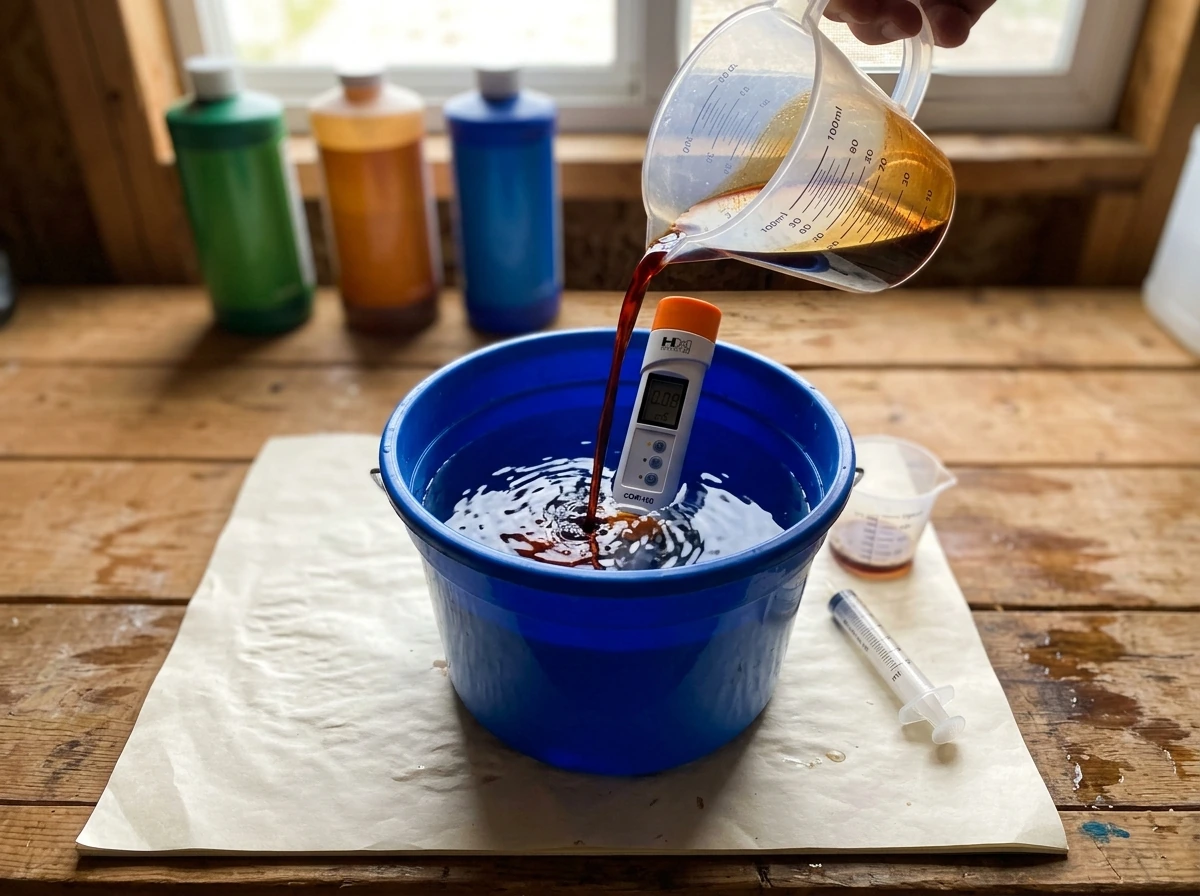
A standard two-part or three-part hydroponic nutrient formula (General Hydroponics Flora Series, MasterBlend 4-18-38 with calcium nitrate and Epsom salt, or similar) works well. For leafy greens like methi, follow a grow-phase ratio: higher nitrogen relative to phosphorus and potassium. If you are using MasterBlend-style mixing, a common starting point for leafy greens per liter of water is 0.6 g MasterBlend 4-18-38, 0.6 g calcium nitrate, and 0.3 g Epsom salt (magnesium sulfate). Always mix calcium nitrate into water first before adding MasterBlend to avoid calcium-phosphate precipitation.
Always mix concentrates into plain water, never into each other. After mixing, check EC and adjust with more water (dilute) or more concentrate (strengthen). Then check and adjust pH using your pH up or pH down solutions, adding them slowly, a little goes a long way in smaller reservoirs.
Feeding and reservoir management schedule
- Top off the reservoir daily with plain pH-adjusted water (not nutrient solution) to replace what has evaporated. This prevents EC from creeping up as plants drink water faster than nutrients.
- Do a partial reservoir change (replace 30–50% of the solution) every 7–10 days to prevent nutrient imbalances and salt buildup.
- Do a full reservoir flush and replace every 2–3 weeks, or whenever EC and pH become hard to stabilize.
- Check pH daily for the first two weeks; once you know your system's drift pattern, every other day is fine.
- Check EC every 2–3 days and adjust if it drops more than 0.3 mS/cm below target.
Water, air, temperature, and light
Water temperature and oxygenation
Water temperature in your reservoir should stay between 18–22°C (64–72°F). Warmer water holds less dissolved oxygen and encourages root rot and pathogen growth. I learned this the hard way on my first DWC run in summer, the reservoir hit 26°C and the roots turned brown within a week. If your ambient temperature is high, consider insulating your reservoir or running the air pump constantly (not on a timer) to maximize oxygenation. In a DWC system, run your air stone 24 hours a day. There is no benefit to turning it off, and turning it off, even briefly, drops dissolved oxygen levels fast.
In an NFT system, the thin film of nutrient solution flowing over roots is naturally well-oxygenated, but make sure your channel slope is correct (typically 1:30 to 1:40, about 2–3% gradient) so the film flows continuously and does not pool.
Air temperature and humidity
Methi grows best in ambient air temperatures of 21–24°C (70–75°F). Below 18°C, growth slows significantly and germination can stall. Above 28°C, plants start to bolt faster (going to seed) and leaves become tougher and more bitter. Relative humidity between 50–70% is ideal. Lower humidity is fine as long as plants are not wilting; higher humidity (above 80%) invites powdery mildew and mold, especially on methi's slightly fuzzy leaves.
Lighting
Methi is not a high-light crop. For leafy green herbs like methi, a target PPFD of around 100–200 µmol/m²/s at canopy level with a photoperiod of 14–16 hours per day is sufficient for fast, healthy growth. This translates to a Daily Light Integral (DLI) of roughly 6–12 mol/m²/day, which most modern LED grow lights can deliver easily. Running lights for 16 hours and giving plants 8 hours of darkness also helps prevent premature bolting.
In practice: a 45W LED grow panel positioned 20–30 cm above a small DWC tote will cover a 40 cm x 40 cm canopy well. If you see seedlings stretching tall and thin toward the light (etiolation), your light is too far away or too dim. If leaf edges are bleaching or curling up, the light is too close or too intense. Methi is forgiving, minor adjustments fix these fast.
How to harvest, encourage regrowth, and store what you pick
When to harvest
Methi is ready for a first harvest when plants are 15–20 cm (6–8 inches) tall, which typically happens 18–25 days from germination in a well-managed hydroponic setup. At this stage the leaves are tender, aromatic, and at peak flavor. If you let them go much longer without cutting, the stems get woodier and the bitterness intensifies. You will also see flower buds forming on the tips around day 30–35, harvest before that happens for the best-tasting greens.
Cut-and-come-again harvesting
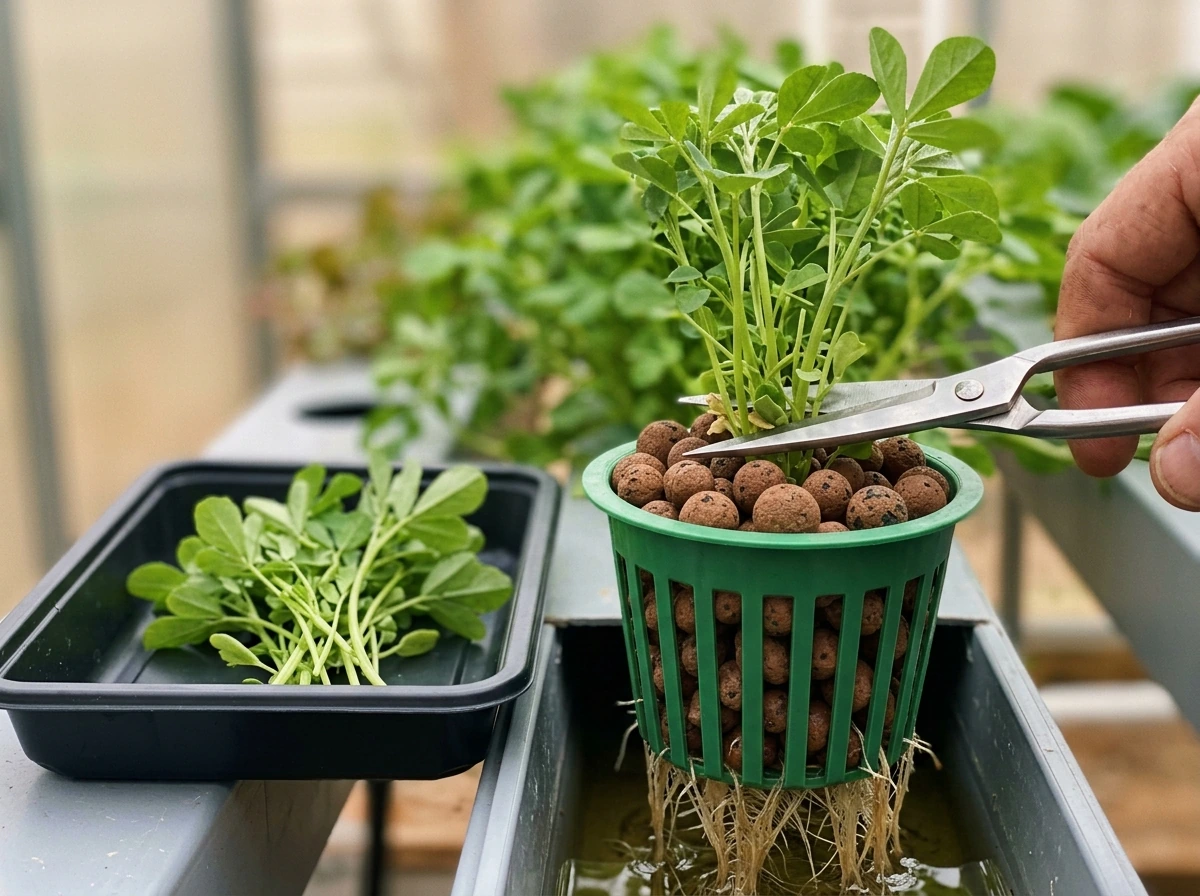
This is where hydroponic methi really shines. Use clean scissors or a small blade and cut stems leaving 5–7 cm (2–3 inches) of stem above the media surface. Do not cut all the way to the base. Within 7–10 days, the plant will push out new side shoots from the remaining stem nodes and give you a second flush of growth. In my experience, hydroponically grown methi reliably gives 2–3 good harvests per planting before plants start bolting or weakening. After the third cut, the plant quality drops and it is worth starting fresh with new seeds.
Storing freshly harvested methi
- Rinse harvested methi gently in cool water and spin or pat dry.
- Wrap loosely in a dry paper towel, place in an airtight container or zip bag, and refrigerate. It stays fresh for 5–7 days this way.
- Do not store wet methi — moisture accelerates wilting and rotting.
- For longer storage, blanch briefly (30 seconds in boiling water, then ice bath), squeeze out moisture, and freeze in portions. Frozen methi is usable for 2–3 months for cooking, though texture changes.
Troubleshooting: what to do when things go wrong
Seeds are not germinating
If seeds have not sprouted after 4–5 days, the most common culprits are temperature too low (below 18°C), seeds that were soaked too long and suffocated, or old/poor-quality seeds. Check that your growing area is genuinely at 21–24°C, not just the room thermostat reading. Try a fresh batch of seeds from a reputable source. Fenugreek seeds sold for cooking (from the grocery spice aisle) often have lower germination rates than those sold for planting.
Slow or stunted growth after germination
Slow vegetative growth is almost always either a nutrient issue or a light issue. Check EC first, if it is below 1.2 mS/cm at the vegetative stage, the plants are being underfed. Then check pH; if it has drifted above 6.5 or below 5.5, nutrient lockout is likely and will mimic a deficiency even if nutrients are present. Check your light intensity and hours next. Methi should visibly grow day over day in a well-lit, well-fed setup.
Yellowing leaves
Yellowing in methi can mean several things depending on where it appears. Older (lower) leaves yellowing first is often nitrogen deficiency, raise EC slightly and confirm pH is in range. Yellowing between leaf veins (interveinal chlorosis) on newer leaves points to iron or manganese deficiency, almost always caused by pH drifting above 6.5 (those minerals precipitate out of solution). Lower your pH back into the 5.8–6.2 range and do a partial reservoir change. Uniform yellowing across all leaves with no green veins can signal overwatering in a media bed or root rot in DWC, check roots immediately.
Root problems (brown, slimy, or smelly roots)
Healthy methi roots should be white or off-white and slightly fuzzy. Brown, slimy, or foul-smelling roots mean root rot, typically caused by Pythium or other water molds. The main triggers are high water temperature (above 24°C), insufficient dissolved oxygen, or light leaking into the reservoir and feeding pathogens. Fix: lower water temperature, increase aeration, seal all light leaks with opaque tape or paint, and do a full reservoir flush. A small dose of beneficial bacteria (Bacillus subtilis-based products like Hydroguard) added to the reservoir can help suppress future outbreaks.
Algae in the reservoir or on media
Green or brown algae growing in your reservoir or on exposed media surfaces means light is getting in. Algae compete with your plants for nutrients and oxygen and can clog drip emitters or NFT channels. The fix is purely physical: cover every light entry point. Use opaque lids, black tubing, and aluminum tape over any gaps. If algae is already established, do a full reservoir drain, scrub everything, and rinse with a dilute hydrogen peroxide solution (3 ml of 3% H2O2 per liter of water), then rinse again with clean water before refilling. Also ensure the top of your growing media is not sitting in a puddle of nutrient solution at the surface, that wet surface area is prime algae real estate.
Leggy, falling-over stems
If stems are tall and thin and flopping over, plants are not getting enough light. Move the light closer or increase intensity. Also check spacing, overcrowded methi will stretch toward light and compete. Thin to one strong seedling per net pot if you sowed multiple seeds and they all germinated. A small fan providing gentle airflow also helps strengthen stems over time, similar to how wind stress works outdoors.
Once you get one full grow cycle under your belt, ...from seed soak to second harvest..., you will have a clear feel for how your specific setup behaves. Methi is fast enough that mistakes become learning opportunities within days, not weeks. It is honestly one of the better crops to practice hydroponic fundamentals on before moving to more demanding plants. If you are exploring other water-based growing projects, the same core skills around pH, EC, and oxygenation apply whether you are running NFT herbs, DWC lettuce, or even aquaponics setups where fish and plants share the same water.
FAQ
Can I grow methi hydroponically without a lot of ventilation or a fan?
Yes, but keep the leaves dry between cutting and replanting (wipe droplets off, ensure airflow, and avoid misting directly on foliage). In hydroponics, extra leaf wetness mainly raises mildew risk, so using humidity control (aim for roughly 50–70%) matters more than adding water.
What should I do if my water temperature runs high during the day?
If you have no separate grow room, you still need to protect the reservoir from overheating. Wrap the tote with reflective insulation or a foam jacket, and keep the system away from direct sun and heat sources, since even a short rise above about 24°C can trigger root problems.
How do I stabilize pH when it keeps drifting every day?
Target a clean pH range, then adjust with small doses. If pH is drifting upward repeatedly, check alkalinity from your water source, and do smaller more frequent top-ups rather than one big correction that can overshoot EC.
What’s the best way to correct symptoms if EC is too high?
For methi, seedling EC is usually better on the lower side. If plants look chlorotic or stunted and EC is already above about 2.2 mS/cm, flush with fresh solution (or dilute, then recheck pH) instead of adding more fertilizer.
How do I prevent methi from turning bitter after the first few harvests?
Do not treat methi like a “cut and forget” crop. If you let it go past the first flower bud stage (around day 30–35), leaves get tougher and more bitter, and subsequent flushes often decline faster than expected.
How often should I calibrate my pH and EC meters for hydroponic methi?
Use a pH meter that is recently calibrated and rinse electrodes between uses. Quick tip: measure after nutrients and after pH adjustment mixing, then wait 5 to 10 minutes and recheck, since some nutrient systems shift pH slightly once fully dispersed.
Can I run the air pump on a timer in DWC?
Yes, but you need to ensure roots stay oxygenated. If you cannot run DWC air continuously, switch to a method with higher oxygen transfer (NFT or a media bed with good drainage), because brief air interruptions can drop oxygen fast and brown roots may appear within days.
What should I change if my methi seedlings are stretching tall?
If you see stretching, first raise light intensity or bring the light closer, then verify light schedule. Overly long photoperiods can also hasten bolting, so stick to about 14–16 hours on, especially if your room is warm.
Is it okay to harvest only a few stems instead of doing a full cut?
Partial harvest is usually fine, but cut conservatively. Leave at least several centimeters of stem above the media and keep the central growing point intact so side shoots can emerge, otherwise regrowth slows and you may lose the second flush.
What’s the safest way to clean the system between grow cycles?
For methi, you can run chlorine-safe cleaning practices, but avoid harsh additives in the reservoir during production. If you must disinfect between cycles, rinse thoroughly and allow the system to run with plain water first, then refill with fresh nutrients and recheck pH and EC.
How can I tell if yellow leaves are nutrient deficiency or pH-related?
Many “yellowing” cases are actually pH drift. If the new growth is paling between veins, lower pH back into about 5.8 to 6.2 and do a partial reservoir change, since raising pH above 6.5 commonly locks out iron and manganese.
Why is algae appearing even though I’m not leaving the reservoir in direct sun?
Yes, especially in media beds. If the media surface stays wet, algae can establish quickly. Improve drainage so the top layer doesn’t sit in puddled solution, and block light with opaque covers on any exposed nutrient or media contact points.